
Baby Bedtime Routine for Better Sleep


If bedtime feels like the most emotional part of your day, you are not alone. One minute your baby is smiling, the next they are fighting sleep like it is their job. A bedtime routine will not magically fix every night, but it can bring calm, predictability, and a sense of safety for both you and your baby.
Let’s walk through why bedtime routines matter, when to start one, and how to make it work for real life, not just perfect Instagram nights.
Why is a bedtime routine important for babies?
Babies love knowing what comes next, even when they cannot say it yet. Their days are full of stimulation, sounds, lights, and movement. A consistent bedtime routine gives them a gentle signal that the day is slowing down and rest is coming.
A predictable routine helps your baby feel safe and secure. Over time, their brain begins to associate certain steps with sleep, which makes falling asleep easier.
Research shows that babies and children with consistent bedtime routines often fall asleep faster, wake less during the night, and sleep more consistently overall.
Just as important, bedtime routines create a special moment of connection. Those quiet minutes before sleep help your baby feel close to you, which supports emotional security and healthy attachment.
Parent reminder: A calm bedtime routine helps you too. When evenings feel predictable, you get more space for rest, connection, or simply sitting in silence after a long day.
When should I start a bedtime routine with my baby?
You can start a bedtime routine anytime. Truly.
Some parents begin in the newborn stage with something very simple. Others wait until evenings start feeling chaotic. There is no wrong time to begin. Babies of all ages benefit from consistency, even toddlers who seem to resist everything.
If tonight feels like a good night to start, then tonight is perfect.
What are some examples of a baby’s bedtime routine?
Moonlight Rhythm
Bath or Wipe Down
A warm transition into rest.
Lotion & Pajamas
Soothing touch to calm the skin.
The Feeding
A quiet moment for closeness.
Sleep Sack or Swaddle
Signaling it is time for bed.
Book or Song
A familiar voice to end the day.
Into Bed
Ready for peaceful sleep.
Your bedtime routine does not need to be long or fancy. Simple works. What matters most is doing the same steps in the same order each night.
You do not need the same book or song every evening. You do not need a bath every night. You just need a rhythm your baby can recognize.
Here are a few gentle examples:
• Bath or wipe down
• Lotion and pajamas
• Feeding
• Sleep sack or swaddle
• Book or song
• Into bed
That is it. No pressure to add more.
Bedtime routines in real life
Some nights include both parents. Some nights it is just you. Some nights feel smooth, and others feel messy. All of that still counts.
Your routine can flex based on your family, your baby’s age, and your energy level. What matters is that your baby learns bedtime feels familiar, loving, and safe.
Is it best to bathe a baby at night?
A bath can be a beautiful part of a bedtime routine, and science supports it too.
A warm bath causes blood vessels to open near the skin. When your baby gets out, their body temperature drops slightly. That drop helps signal the brain that sleep is coming.
But you do not need a bath every night.
Some families love nightly baths. Others skip them most nights. Both are fine. The routine still works as long as what comes after stays consistent.
On bath nights, your routine might look like this:
Bath, lotion, pajamas, feeding, sleep sack, cuddles, bed.
On non-bath nights, it might be:
Wipe face and hands, lotion, pajamas, feeding, sleep sack, cuddles, bed.
Your baby will still understand the message.
When should bedtime be?
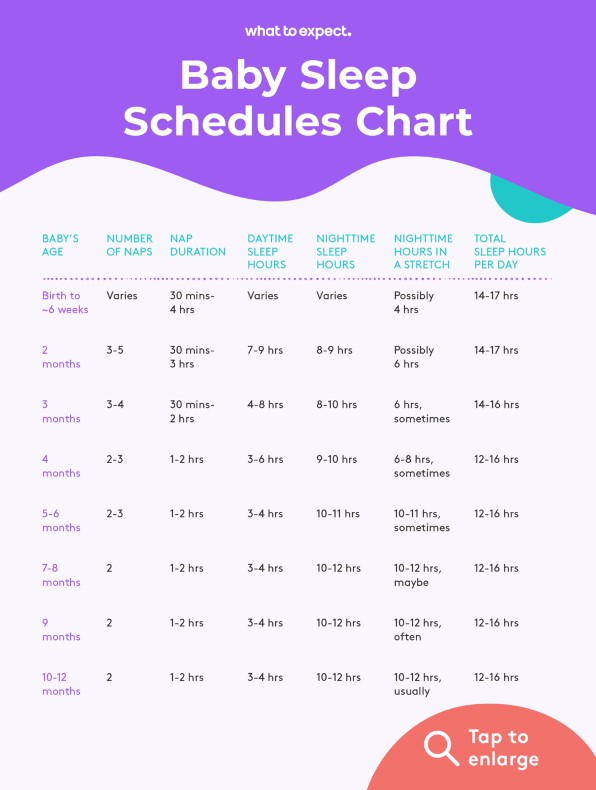
Most babies over four months naturally do best with a bedtime between 7:00 and 8:00 pm. This window often allows them to fall asleep more easily and stay asleep longer.
That said, bedtime is not about the clock alone. It is about your baby’s wake window.
Your baby needs enough awake time before bed to feel ready for sleep, but not so much that they become overtired. Sometimes that means waking them from the last nap of the day to protect nighttime sleep.
A bedtime range works better than a strict time. Aim for a 30 to 60-minute window rather than an exact minute. Flexibility helps real-life work better.
Start your bedtime routine so your baby goes into the crib at the very end of their wake window.
Should my baby ever have an early bedtime?
Yes. And sometimes it is exactly what your baby needs.
An early bedtime, even as early as 6:00 pm, can help when naps are short, skipped, or messy. It can also help during sleep regressions, illness, or nap transitions.
Many parents worry that an earlier bedtime will lead to earlier mornings. In most cases, the opposite happens.
The first half of the night is when babies get the deepest, most restorative sleep. Earlier bedtime protects that valuable rest.
Is a later bedtime ever okay?
Absolutely.
Life happens. Evening events, travel, car naps, or family schedules sometimes push bedtime later. That is normal.
If a later bedtime is working for your family and your baby is sleeping well, there is no problem. If sleep starts feeling harder, you can always gently move bedtime earlier again.
There is no single right answer, only what works right now.
My baby cries during the bedtime routine every night. What can I do?
This is so hard, and it does not mean you are doing anything wrong.
As babies grow, they begin to understand routines and separation. That awareness can bring tears, especially during sleep regressions or developmental leaps.
Here are a few things that can help:
• Check wake windows to make sure your baby is not overtired
• Change small parts of the routine if it feels emotionally heavy
• Spend happy, playful time in the nursery during the day
• Work on your own calm and confidence around bedtime
Babies feel our energy. When we feel steadier, they often do too.
Our bedtime routine feels perfect, but my baby still needs help falling asleep
Falling asleep independently is a learned skill, not something all babies are born knowing how to do.
For babies under four months, this skill is something you gently practice while still offering plenty of support.
For babies five months and older, independent sleep can be taught through age-appropriate sleep training methods that still prioritize emotional connection.
Needing help to fall asleep does not mean your routine is failing. It simply means your baby is still learning.
Baby’s Bedtime Routine FAQ
Should a newborn have a bedtime routine?
Yes, but keep it simple. Even two or three calming steps can help set the foundation.
Should feeding be part of the bedtime routine?
Yes. Feeding can be a comforting and natural part of winding down.
When should I feed during the bedtime routine?
Typically, near the beginning or middle, so your baby does not fall fully asleep while feeding unless that is appropriate for their age.
When should I start reading to my baby at bedtime?
Anytime. Newborns benefit from your voice just as much as toddlers enjoy the story.
Important note:
The information on TheParentingWay is for educational purposes only and is not medical advice. Always consult your pediatrician with concerns about your child’s health or sleep.