11 Ways Parents Can Respond to Kids’ Big Feelings

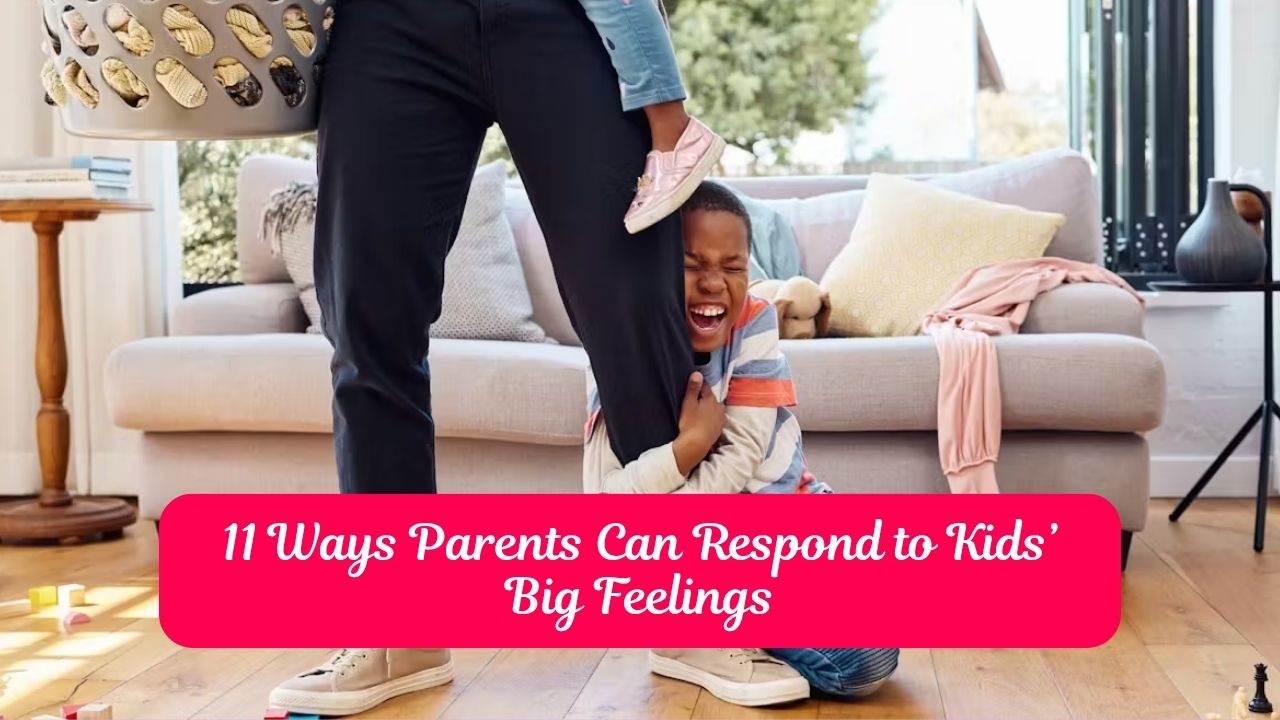
Big feelings are part of childhood. Kids feel anger, sadness, fear, embarrassment, and disappointment just like adults do. The difference is that children do not yet know how to manage these emotions on their own.
Their brains are still developing, and they rely on adults to help them understand what they are feeling and what to do next.
As parents, we often want to stop the feeling as quickly as possible. We want our child to calm down, move on, or behave better.
While this reaction is understandable, emotions are not something children need to be protected from. Emotions are something children need help learning how to handle.
When parents respond in steady, supportive ways, children learn that feelings are safe, manageable, and temporary. This helps everyone feel calmer and more connected.
Below are eleven ways parents can respond to kids’ big feelings in ways that are realistic, respectful, and possible to practice at home.
Navigating Big Feelings
Phase 1: Your Mindset
Normalize the Intensity
A child’s brain is still learning to regulate. What looks like drama is actually development in action.
Borrow Your Calm
Children don’t calm themselves; they co-regulate with you. Your steady voice helps their system settle.
Release the Blame
A child’s meltdown is not a personal failure or a reflection of your parenting success. It is a biological process.
Phase 2: The Response
Acknowledge & Name
Naming the feeling reduces its power. Keep it simple and direct.
“I see you are upset. You seem worried.”Validate, Don’t Agree
You can understand the feeling without liking the situation. Validation makes them feel seen.
“It makes sense that you are disappointed.”Hold the Boundary
All emotions are allowed; not all actions are. Separate the feeling from the behavior clearly.
“It’s okay to be mad, but hitting is not okay.”Remind: This Passes
Emotions feel endless to a child. Remind them that feelings are temporary visitors.
“This feeling will pass. I am here until it does.”Phase 3: The Learning
Wait for the Calm
Lessons cannot be processed during overload. Talk about what happened only after everyone has settled.
Model the Repair
If you lose your cool, apologize. This teaches emotional accountability and rebuilds trust.
1. Understand that big feelings are normal
Children experience emotions more intensely than adults. Their brains are still learning how to process frustration, disappointment, and fear. What feels small to a parent can feel overwhelming to a child.
A broken toy, the wrong snack, or a change in plans can trigger a strong emotional response. This does not mean the child is being dramatic or manipulative. It means their brain is still learning how to regulate emotions.
When parents accept that big feelings are normal, it becomes easier to respond calmly instead of reacting with frustration.
2. Stay calm because your child depends on your calm
Children do not calm themselves first. They calm down through connection with an adult.
When a parent stays calm, the child’s nervous system begins to settle. When a parent becomes angry, rushed, or overwhelmed, the child’s distress often grows.
Staying calm does not mean ignoring behavior or giving in. It means slowing your voice, lowering your body language, and taking a breath before responding. This is something parents can practice, even during stressful moments.
3. Acknowledge your child’s feelings out loud
Children feel more secure when their emotions are noticed and named.
Simple statements work best.
“I see you are upset.”
“That looks really frustrating.”
“You seem worried.”
This step does not fix the problem, but it lets your child know they are not alone. Being acknowledged often reduces the intensity of the emotion.
4. Validate the feeling without needing to agree
Validation means letting your child know their feelings make sense, even if you cannot change the situation.
You are not saying the situation is fair. You are saying the feeling is real.
For example, “It makes sense that you are disappointed you cannot go,” or “I understand why that made you angry.”
Validation helps children feel respected and understood, which makes it easier for them to calm down.
5. Separate emotions from behavior clearly and calmly
All emotions are allowed. Not all actions are allowed.
Parents can acknowledge feelings while still setting limits on behavior.
For example, “I know you are angry, but hitting is not okay,” or “It is okay to feel upset, but throwing toys is not safe.”
This teaches children that feelings are acceptable while boundaries still exist.
6. Help your child put words to their emotions
Children often feel overwhelmed because they cannot explain what they are feeling.
Parents can help by offering simple emotion words.
“Are you feeling mad or sad?”
“Is this a scared feeling or a worried feeling?”
When children learn the language of emotions, they gain more control over their reactions. This is a skill parents can support through everyday conversations.
7. Allow different ways to express feelings
Not all children express emotions through talking.
Some children express feelings better through drawing, movement, or pretend play. Others may want quiet time or physical comfort.
Parents can support expression by offering choices.
“You can draw how you feel.”
“You can sit quietly with me.”
“You can tell me when you are ready.”
These options help children release emotions in healthy ways.
8. Talk about the situation after emotions have settled
Children cannot process lessons during emotional overload. Once they are calm, parents can talk about what happened.
Ask simple questions like, “What part was hardest for you?” or “What did that feeling make you want to do?”
These conversations help children reflect and learn without shame or pressure.
9. Teach that emotions change and pass
When children are upset, emotions can feel endless.
Parents can gently remind them that feelings do not last forever.
“This feeling will pass.”
“You will not feel this way all day.”
“I am here until it feels better.”
This helps children build emotional resilience over time.
10. Practice repair when mistakes happen
No parent responds perfectly every time. Everyone gets tired, distracted, or overwhelmed.
When parents make mistakes, repair matters more than perfection.
Apologizing shows children that relationships can recover. Saying, “I am sorry I did not listen earlier,” models accountability and trust.
This is something parents are fully capable of doing, even in busy homes.
11. Do not take your child’s emotions as a personal failure
Children’s emotions are not a reflection of parenting success or failure.
Kids cry, yell, and melt down for many reasons that have nothing to do with how well a parent is doing. Taking emotions personally creates guilt and stress that does not help anyone.
Parents can care deeply without carrying emotional blame.
Why are parents capable of doing these things?
These strategies do not require special training or perfect conditions. They rely on everyday skills parents already use.
Parents already comfort, guide, and protect their children. Responding to emotions builds on those same instincts.
Progress happens through practice, not perfection. Even small changes in how parents respond can make a meaningful difference over time.
FAQ
Why does my child react so strongly to small problems?
Children experience the world differently. Their brains are still developing emotional regulation skills, so small issues can feel very big.
Should I try to stop my child from feeling upset?
No. Feelings are not harmful. Helping your child understand and manage emotions is more helpful than stopping them.
What if my child’s emotions lead to bad behavior?
Acknowledge the emotion first, then address the behavior. Feelings are allowed. Unsafe actions need limits.
How can I calm my child when I feel overwhelmed?
Pause, take a breath, and speak slowly. Even a small shift in tone can help your child feel safer.
Is it okay to comfort my child even when they are wrong?
Yes. Comfort does not mean approval. It means connection.
What if I respond the wrong way?
Apologize and repair. Children learn a lot from how adults handle mistakes.
How long does it take for kids to learn emotional regulation?
Emotional skills develop slowly over the years. Consistent support matters more than quick results.
Can older kids still benefit from these strategies?
Yes. Emotional coaching helps children of all ages, including teens.
What if my child refuses to talk about feelings?
Respect their pace. Offer presence without pressure. Expression may come later.
Is it normal to feel tired of emotions?
Yes. Parenting emotions is hard work. Taking care of yourself helps you show up better.
When should I seek professional help?
If emotional struggles affect daily life, school, or safety, professional support can help.
Final thoughts
Children learn emotional skills through experience and support. Parents do not need to fix feelings or control them. They need to guide, listen, and stay present.
When parents respond with calm, clarity, and consistency, children gain tools they will use for life.
Being present is enough.