Progressive Phonics Review: It’s Free, but Is It Worth It for Parents?

Free reading programs are appealing to parents, especially when you are just getting started and want to help your child learn phonics at home without committing to an expensive course.
Progressive Phonics is one of the most commonly recommended free phonics programs online, but free does not always mean easy or effective.
This review looks at Progressive Phonics from a parent’s point of view. We focus on usability, structure, teaching quality, and whether it truly works for families teaching reading at home.
TL;DR
Progressive Phonics offers a large amount of free phonics and reading content and uses a solid synthetic phonics approach.
However, the program is poorly organized for parents, lacks a clear step-by-step path, and can be confusing if you do not already understand how reading instruction works.
Best used as a supplement, not a full reading system.
What Is Progressive Phonics?
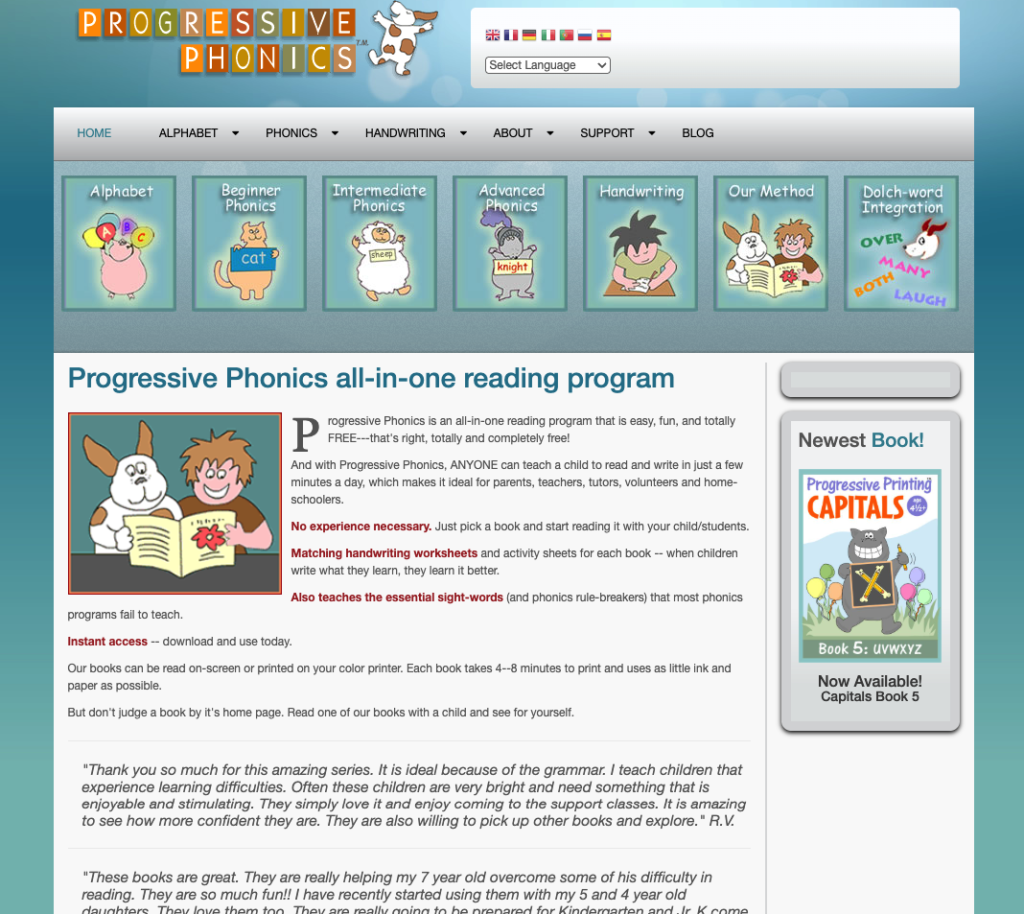
Progressive Phonics is a completely free phonics and early reading program that launched in 2006. It is designed to support children from preschool through early elementary years.
The program follows a synthetic phonics approach, meaning children learn letter sounds first and then blend those sounds to read words. It also includes sight words based on the Dolch sight word list, which is important because many common English words cannot be decoded phonetically.
Everything is available as downloadable PDFs, including readers, activity books, flashcards, and lesson materials.
Who Created Progressive Phonics?
Progressive Phonics was created by an author and illustrator who goes by the name Miz Katz N Ratz. Very little personal or professional information is shared beyond that.
The website states that the project is supported by a sponsor, which allows the materials to remain free. However, the site has not been visibly updated for several years, and copyright dates stop well before the current year.
The resources are still accessible, but because there is no clear organizational backing, parents may want to download materials for safekeeping.
What Does Progressive Phonics Include?

Progressive Phonics is divided into two main courses.
Alphabet Course
This course uses Alphabetti books and is intended for children who are just beginning phonics.
It includes:
- Alphabetti reading books
- Alphabet flashcards
- Activity worksheets
- Instructions for parents
The reading books are long, often 60 pages or more, and follow a shared reading model. The adult reads the black text, and the child reads the red text. This approach helps children participate in real stories without being overwhelmed.
Each book clearly states which sounds are being taught, and most books come in both standard and easier versions.
However, the guidance for parents is inconsistent. Important preparatory steps, such as learning letter sounds before reading books, are not clearly emphasized in the main instructions.
Phonics Course
The Phonics course is aimed at children who already know basic sounds and are ready to read more fluently.
It is divided into:
- Beginner
- Intermediate
- Advanced
This course also includes readers, worksheets, and basic lesson outlines. While lesson plans are provided, they are extremely brief and often assume prior teaching knowledge.
Instructions such as “review alphabet sounds” are common, but no guidance is given on how to do this effectively with a child.
What Works Well
Progressive Phonics being completely free is a major advantage.
The shared reading approach is excellent for early readers. Children get to experience full stories while gradually building decoding confidence.
There is a large amount of material available, enough to support multiple years of early reading practice.
The phonics approach itself is sound. Teaching letter sounds in groups and blending them into decodable words aligns with evidence-based reading instruction.
Where Progressive Phonics Falls Short
The biggest issue is organization. Materials appear to have been added over time without a clear plan to unify them into a parent-friendly system.
Parents are often left unsure:
- Which course to start with
- What order to teach skills
- When to introduce sight words
- How long should each reading session be
Some instructions on the site contradict each other, particularly around age ranges and course suitability. This can quickly erode parent confidence.
The program relies heavily on worksheets. While worksheets can be useful occasionally, they are not ideal as a main learning method for young children. Hands-on games and interactive practice are generally more effective.
Story quality is subjective, but some parents may find the stories long, quirky, or difficult to break into short reading sessions. Early readers should only read for five to ten minutes at a time.
Is Progressive Phonics Good for Parents?
Progressive Phonics works best for:
- Teachers
- Parents with literacy or educational experience
- Families looking for supplemental reading material
It is not ideal for:
- Parents new to teaching reading
- Families wanting a clear step-by-step system
- Children who need structured progression and guidance
Most parents benefit from programs that explain not just what to use, but when and why to use it.
Final Verdict
Progressive Phonics is generous, well-intentioned, and built on solid phonics principles. However, it assumes a level of knowledge most parents do not have.
As a free resource, it is impressive. As a complete reading system for parents, it is lacking.
Use it as a supplement, not a standalone solution.
Frequently Asked Questions
Is Progressive Phonics really free?
Yes. All materials are available for free download.
At what age is Progressive Phonics best for?
Generally ages 4 to 7, depending on reading readiness.
Is Progressive Phonics phonics-based?
Yes. It uses a synthetic phonics approach and includes sight words.
Can Progressive Phonics teach my child to read by itself?
It can help, but most parents will need additional structure or guidance.
Is Progressive Phonics better than paid programs?
It offers great value for free, but paid programs are usually clearer and easier for parents to follow.
Read More Reviews!