
Setting up a child’s room can feel overwhelming when you want it to support independence while still feeling calm and organized. It is not always clear how to balance simplicity with everyday needs.
Many parents struggle with clutter, furniture choices, and creating a space their child can actually use on their own. Others worry about making the room too empty or not functional enough.
A Montessori-inspired room focuses on low furniture, open space, and easy access to everyday items. When arranged thoughtfully, it helps children move freely, explore, and build confidence in their routine.
There are many ways to approach it, from simple layouts to more detailed setups that fit different spaces and preferences.
This guide brings together 23+ Montessori Room Ideas to help you create a space that feels calm, practical, and easy for your child to use.
How Can A Montessori Room Support Independence And Daily Routine?
When a room is not set up for a child’s reach, it can slow down simple tasks and create frustration. A Montessori approach makes everything accessible and easy to understand.
It helps children take part in daily activities like dressing, playing, and tidying up without constant help. Clear organization and open space support both learning and movement.
You can adjust the setup based on your space and your child’s age. Keeping things simple while focusing on accessibility helps create a room that works naturally every day.
1. Low Wooden Storage With Open Play Setup
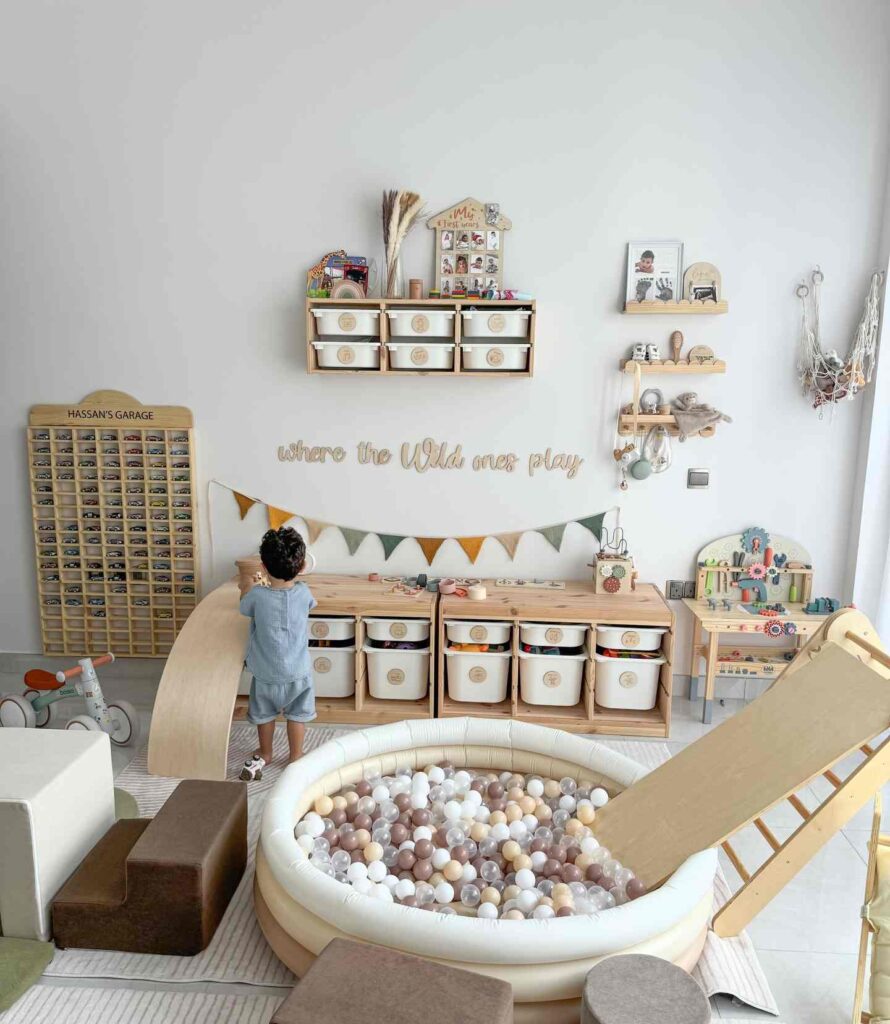
A calm, open layout makes this space feel easy to move through. Everything sits low to the ground, so a child can reach toys without help. The wooden shelves with labeled bins keep items visible and sorted in a simple way.
Right in front, a soft ball pit paired with a small slide adds movement and play without crowding the room. The neutral tones keep the focus on the activity, not the clutter. This kind of setup supports independence while still feeling warm and organized.
Room Design Ideas Parents Also Love
• Baby Boy Nursery Ideas
• Whimsical Nursery Ideas
• Nursery Paint Color Ideas
2. Soft Neutral Montessori Bedroom With Floor Bed
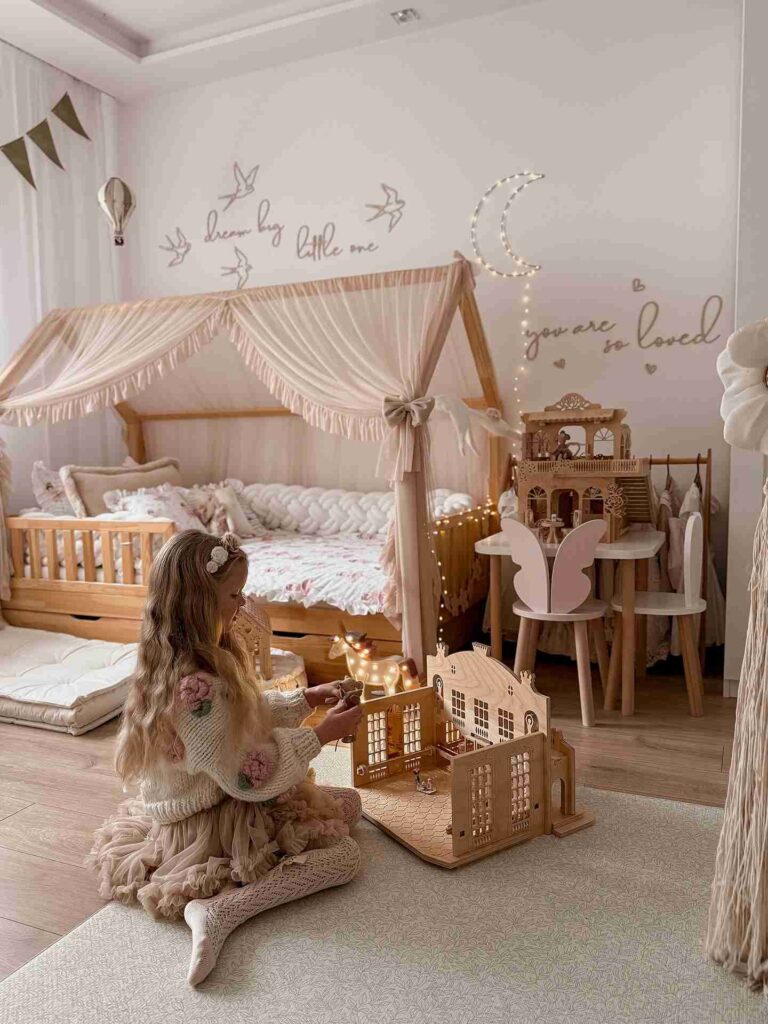
Warm tones and soft textures shape a calm sleeping area that feels safe and inviting. The low wooden bed sits close to the floor, allowing easy access without barriers. Light fabric drapes add a gentle canopy effect without closing off the space.
Nearby, a small play table and open dollhouse setup create a quiet activity corner. Soft lighting and simple wall decor keep the room peaceful, helping the child shift naturally between rest and play.
3. Child Sized Activity Table With Learning Corner
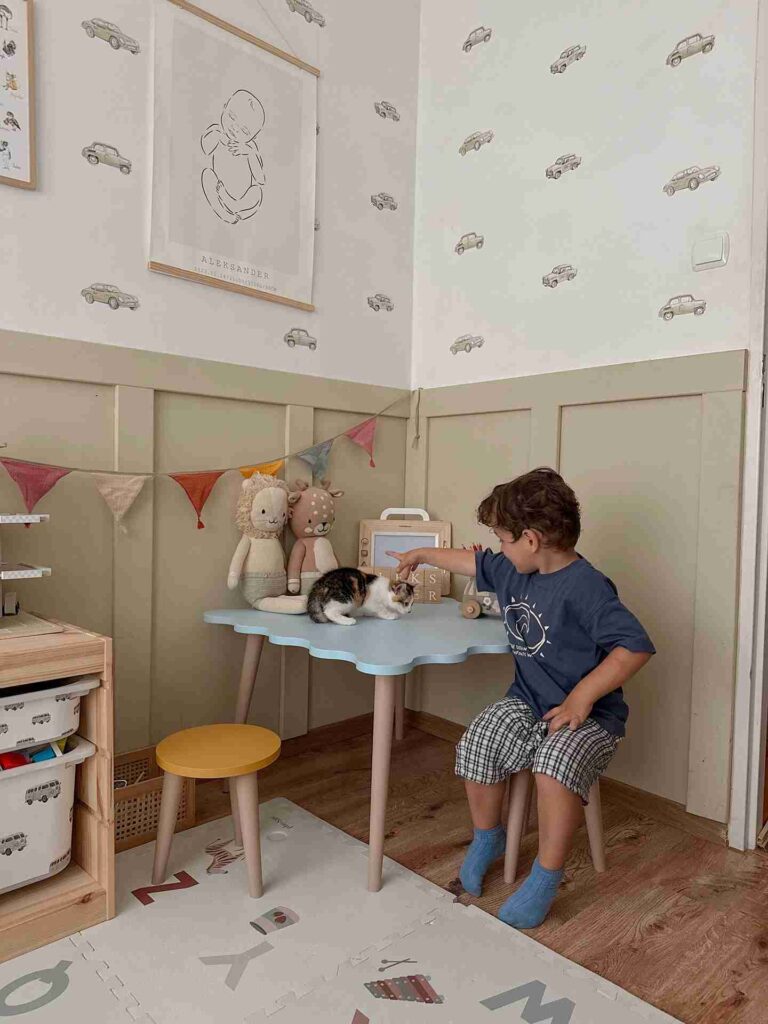
A small table placed right in the corner creates a quiet spot for focused play. The height fits the child well, making it easy to sit, reach, and explore without strain. A simple stool beside it keeps the setup balanced and comfortable.
Soft toys, a small board, and a few learning items stay within reach, keeping the area intentional and uncluttered. The surrounding wall space adds warmth with subtle decor, while the nearby storage unit keeps extra items neatly tucked away.
4. House Frame Floor Bed With Soft Drapes
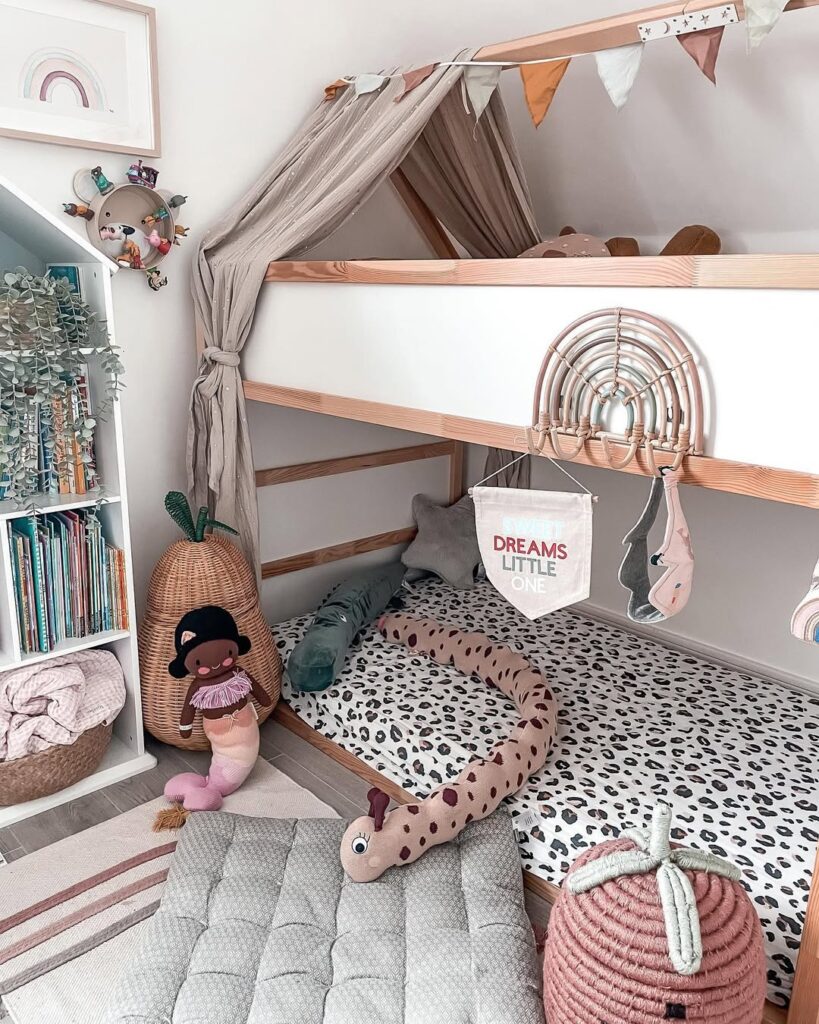
A wooden house frame turns the sleeping area into a cozy nook without raising the bed height. The mattress stays close to the floor, allowing easy access at any time. Light fabric drapes soften the structure and create a gentle, enclosed feel.
Books and toys sit nearby on open shelves, keeping everything within reach. The mix of textures, from woven baskets to soft cushions, adds warmth while still keeping the layout simple and functional.
5. Minimal Canopy Floor Bed With Warm Tones
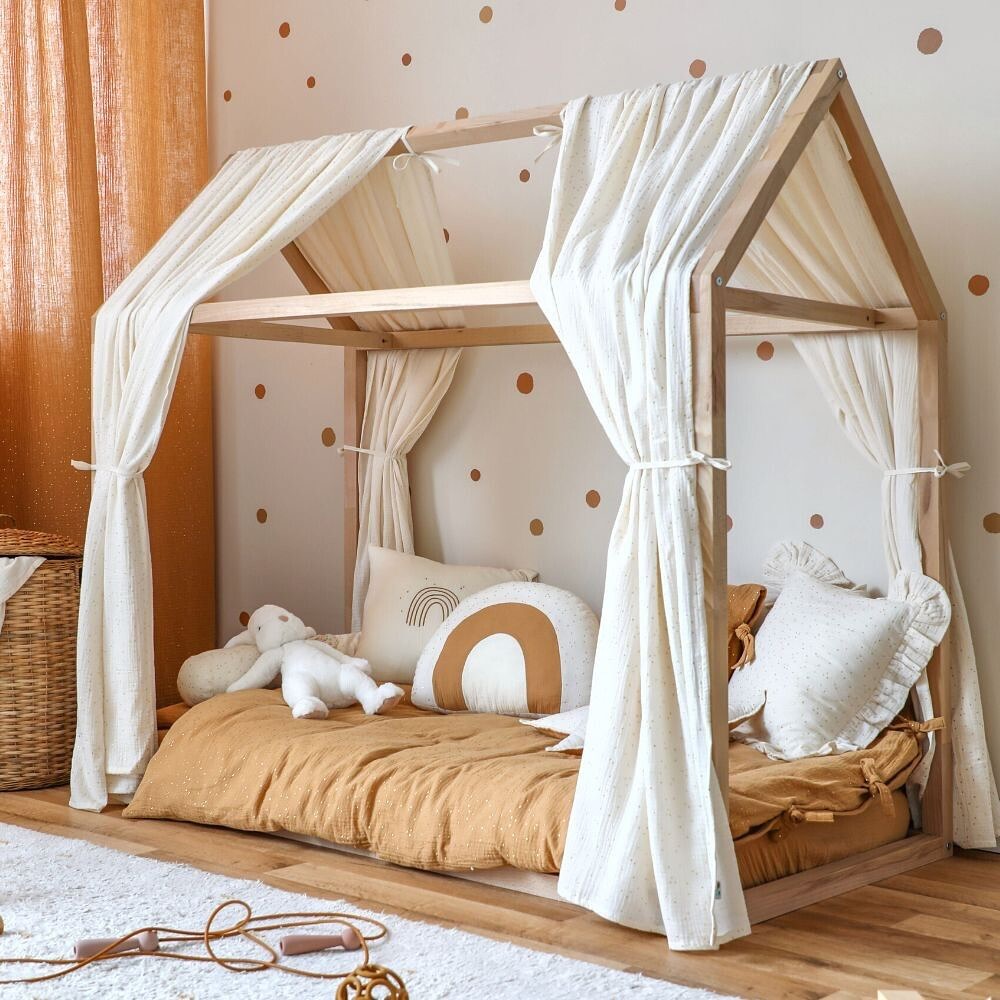
A clean wooden frame paired with soft white curtains keeps the space calm and airy. The low mattress encourages independence while still feeling secure. Subtle wall details and soft colors help maintain a quiet environment.
A few cushions and plush toys add comfort without crowding the area. Natural light from the side keeps the room bright, making it a peaceful spot for both rest and quiet play.
6. Shared Montessori House Bed Setup
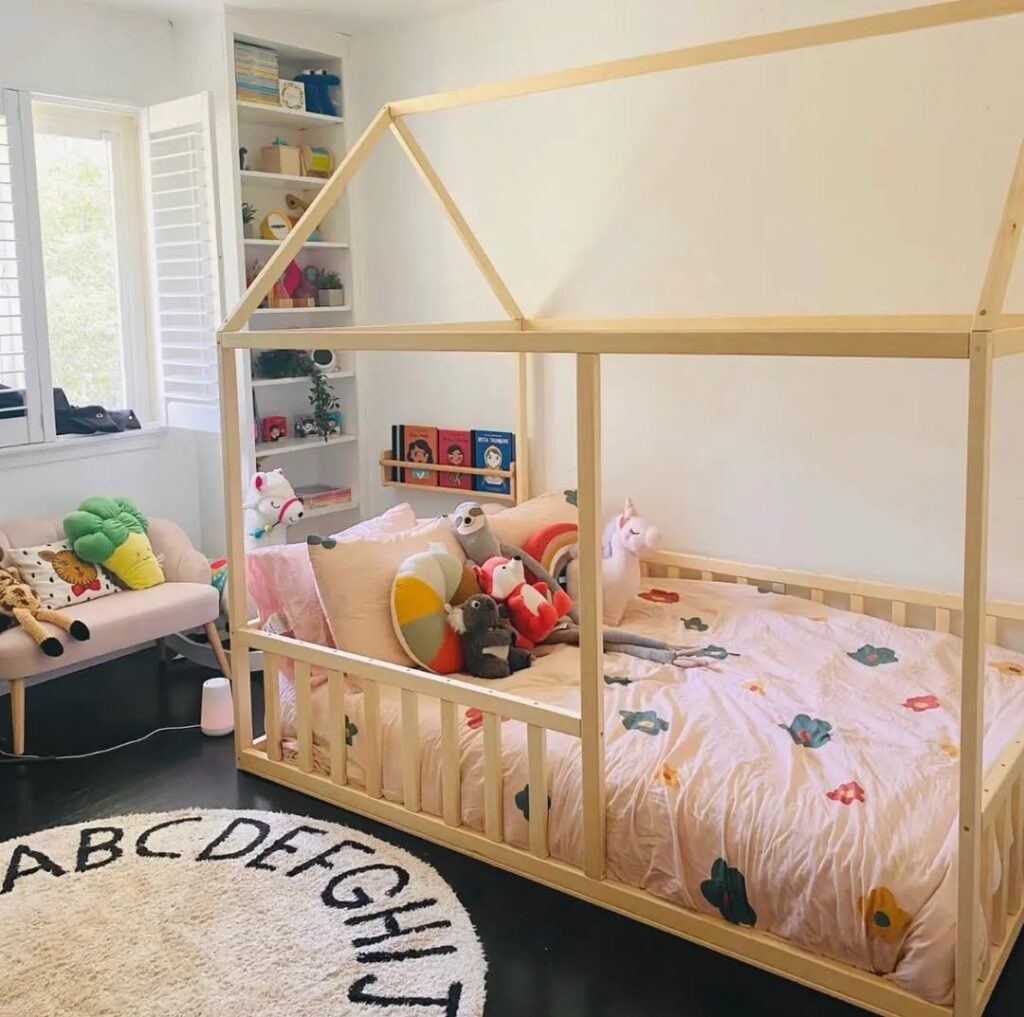
This setup uses a larger house style frame to create a shared sleeping space. The low structure allows children to climb in and out easily. Soft bedding and playful pillows bring comfort without adding clutter.
A nearby shelf with books and toys supports independent access throughout the day. The open floor space around the bed keeps movement easy and unrestricted.
7. Bunk Style Montessori Floor Bed With Play Area
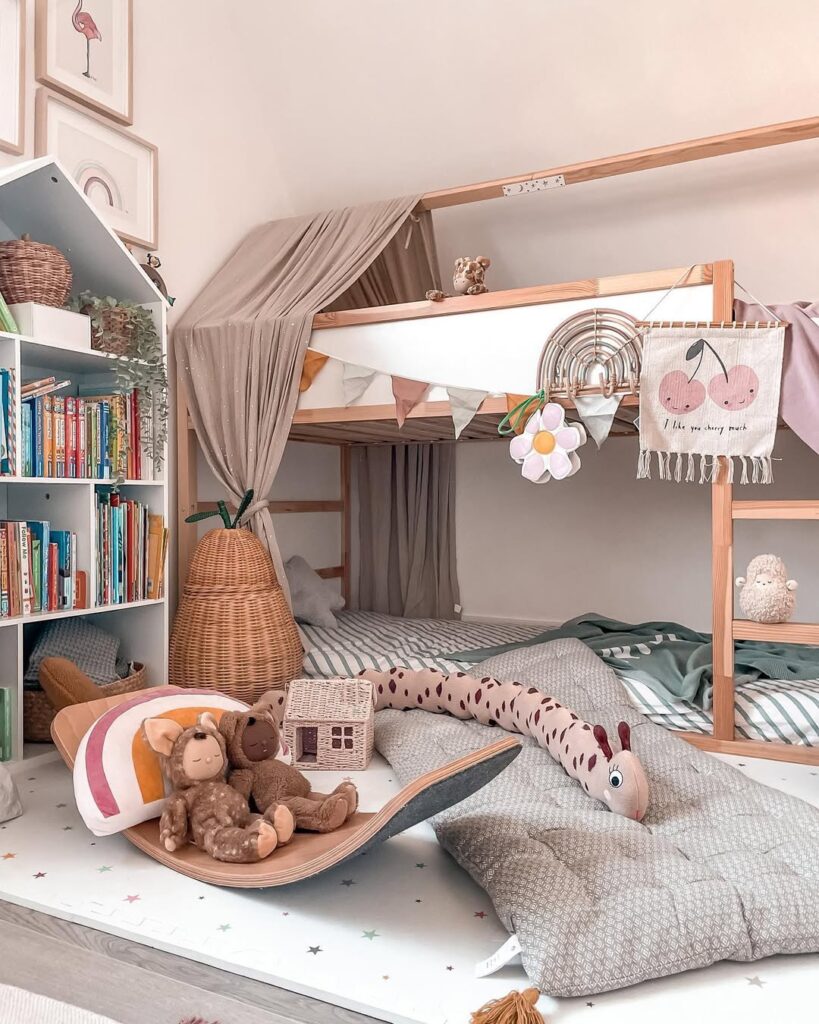
A two-level wooden frame creates both rest and play zones in one structure. The lower bed stays accessible, while the upper section adds visual interest without overwhelming the space.
Soft mats and floor cushions underneath form a safe play area. Nearby shelves keep books and toys organized, helping the room stay tidy and inviting.
8. Floor Bed With Wall Mural And Play Tent
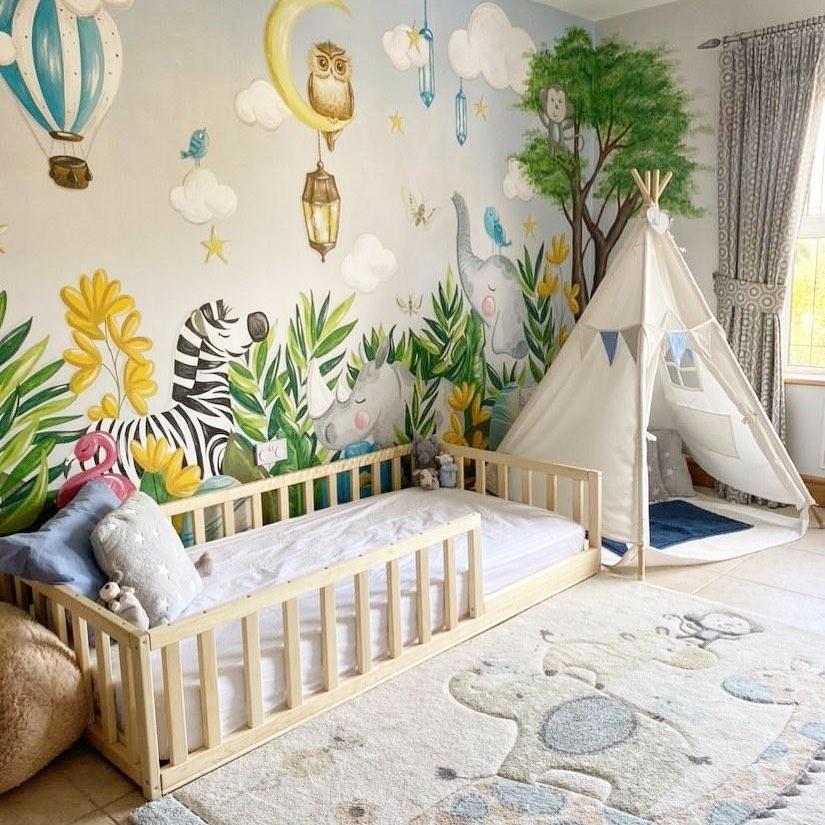
A low wooden bed sits against a wall filled with playful animal artwork. The open design allows easy movement and keeps the focus on the child’s level.
A small tent nearby creates a separate play corner for quiet time. The soft rug and simple layout balance activity and rest, making the room feel both lively and calm.
9. Pastel Montessori Floor Bed With Open Play Space
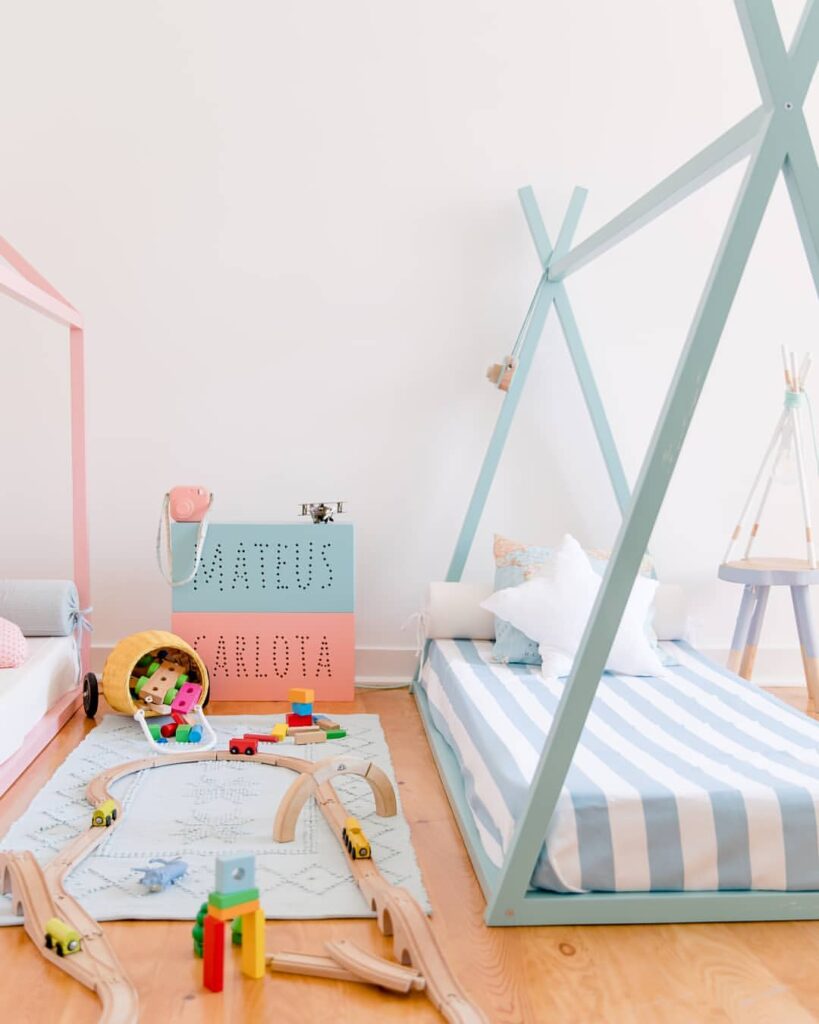
Soft pastel tones bring a light and playful feel to this setup. The low bed frame sits directly on the floor, making it easy for a child to move in and out freely. A simple structure above adds shape without closing off the area.
The open floor becomes a play zone with train tracks and blocks spread out neatly. Toys stay visible and accessible, encouraging independent play while keeping the space calm and uncluttered.
10. Twin House Frame Beds With Warm Lighting
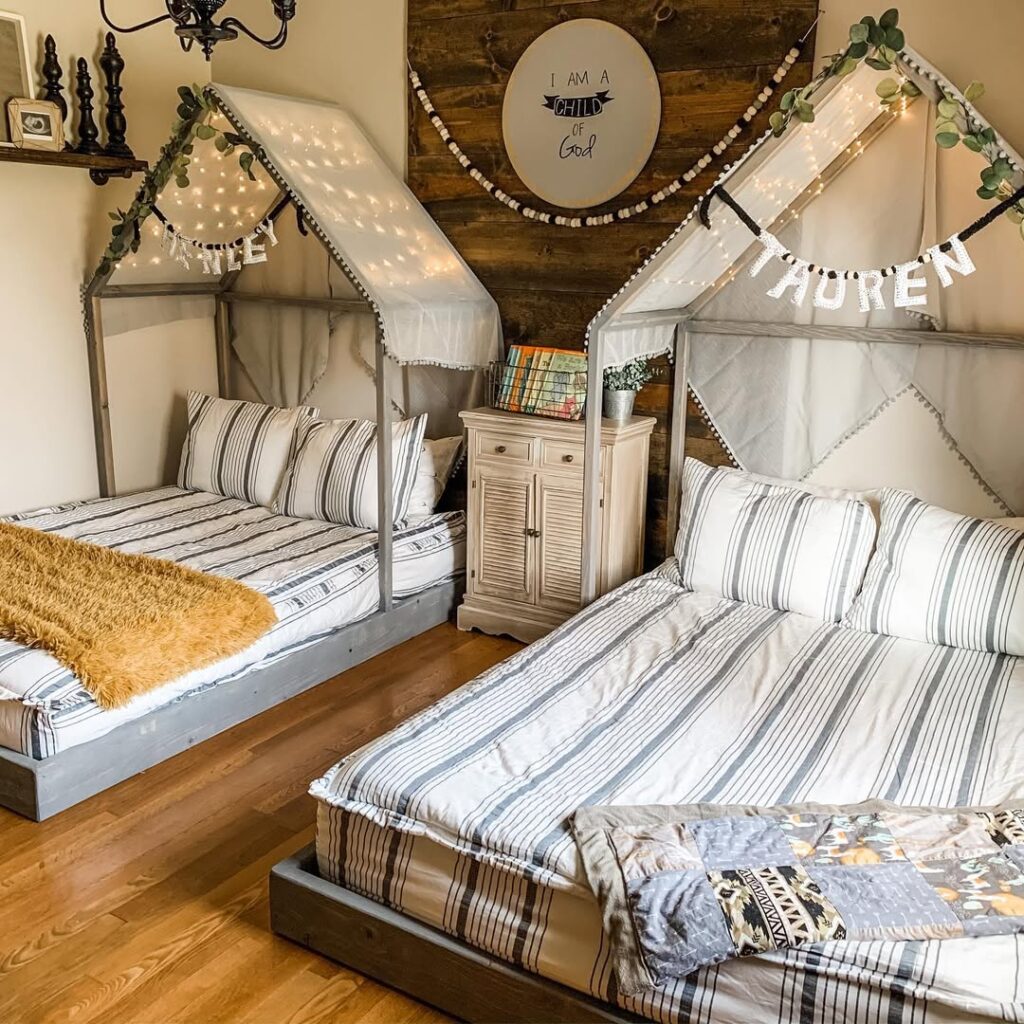
Two low house frame beds sit side by side, creating a shared yet defined sleeping area. Soft string lights and gentle fabric details add warmth without overwhelming the room.
A small table between the beds keeps books within reach, supporting quiet routines. The balanced layout allows each child to have their own space while still feeling connected.
11. Soft Blush Montessori Bed With Wall Decor
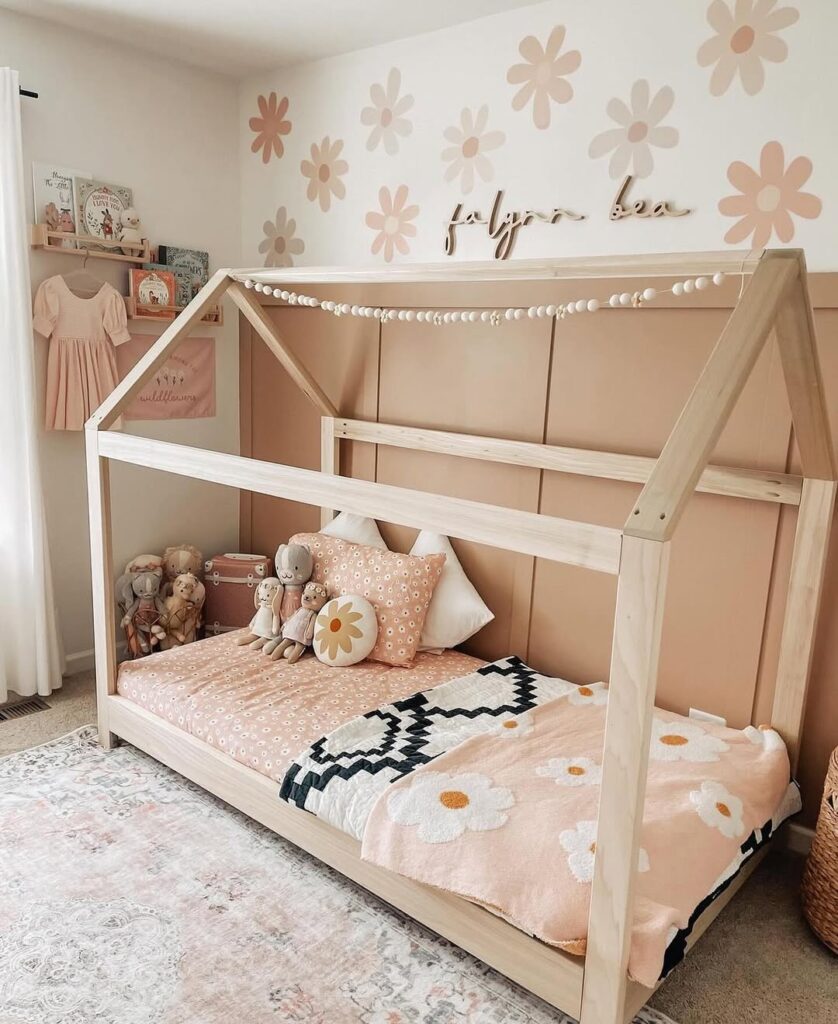
A light wooden house frame pairs with soft blush tones to create a gentle and inviting space. The low bed supports independence, while layered cushions add comfort.
Simple wall shelves display a few books and items at eye level. The open layout keeps everything easy to reach and helps maintain a calm, organized feel.
12. Bright Montessori Bed With Learning Shelf
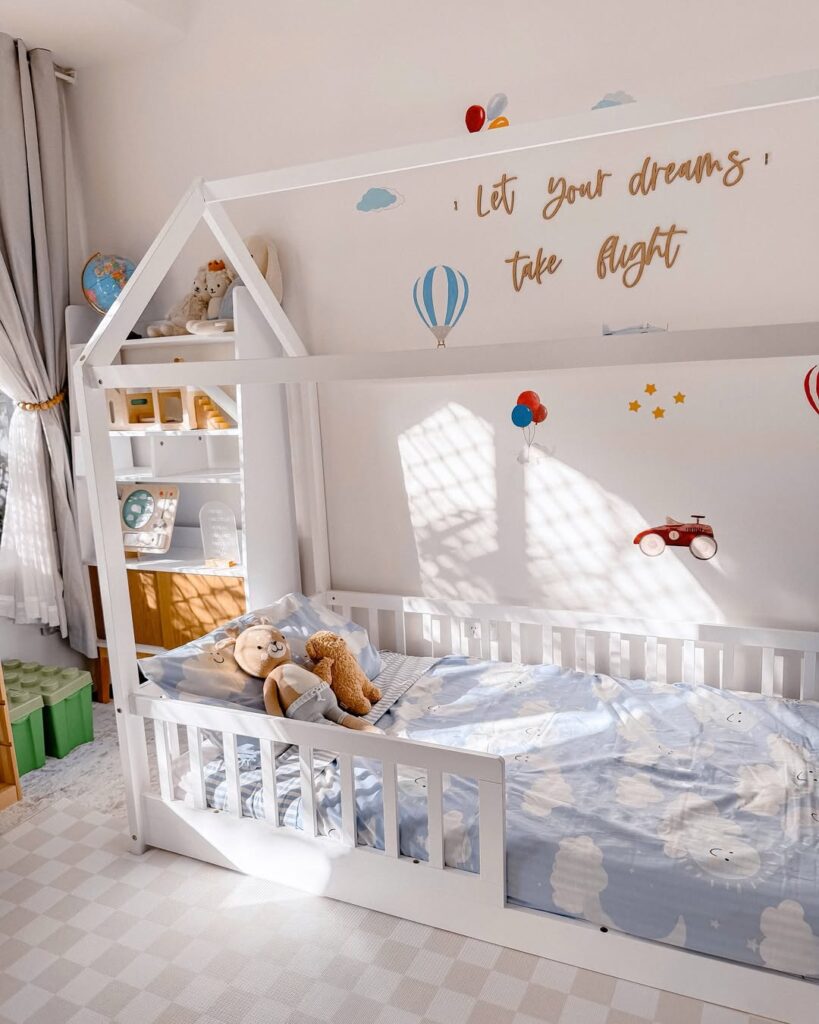
Natural light fills this room, making the low bed area feel open and fresh. The simple frame keeps the focus on function, allowing easy movement around the space.
A nearby shelf holds toys and learning materials at a child-friendly height. The clean layout supports both rest and independent exploration throughout the day.
Create A Functional Learning Space
• Nursery Organization Ideas
• Nursery Paint Color Ideas
• Baby Boy Nursery Ideas
13. Cozy Canopy Montessori Bed With Soft Textures
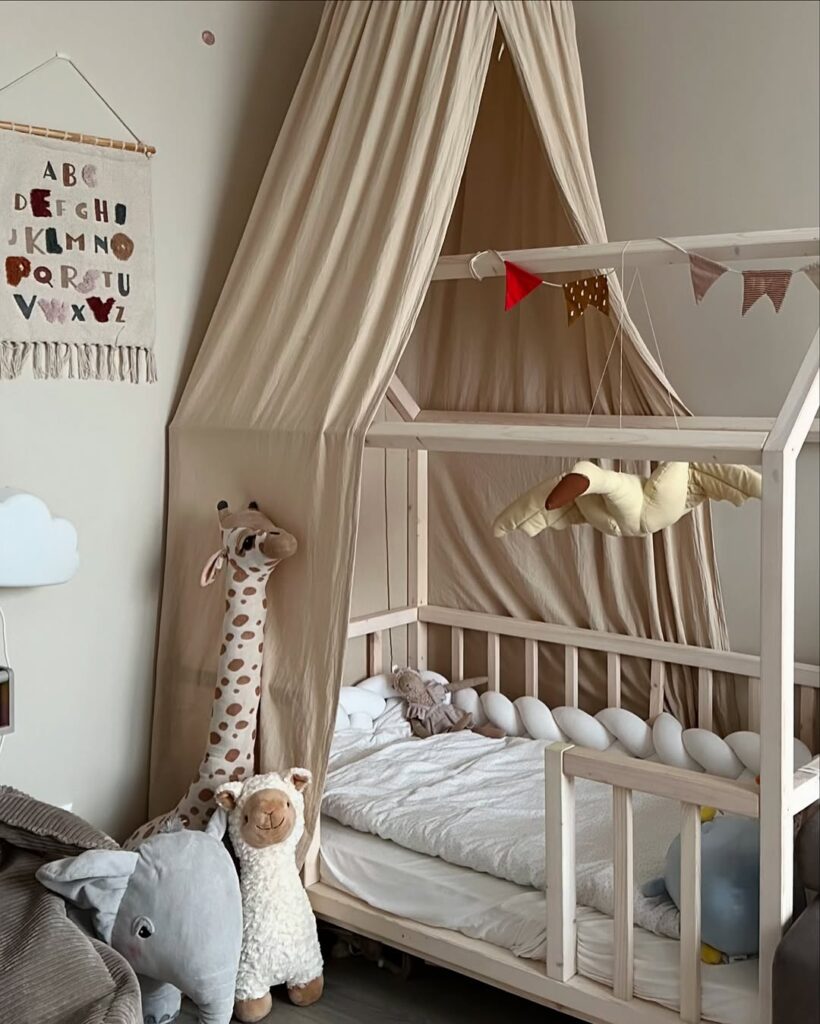
Light fabric drapes create a soft canopy that gently frames the bed. The low structure keeps everything accessible while adding a sense of comfort and privacy.
Plush toys and soft bedding bring warmth without cluttering the area. The surrounding space stays open, allowing the child to move, play, and rest with ease.
14. Sun Theme House Frame Floor Bed
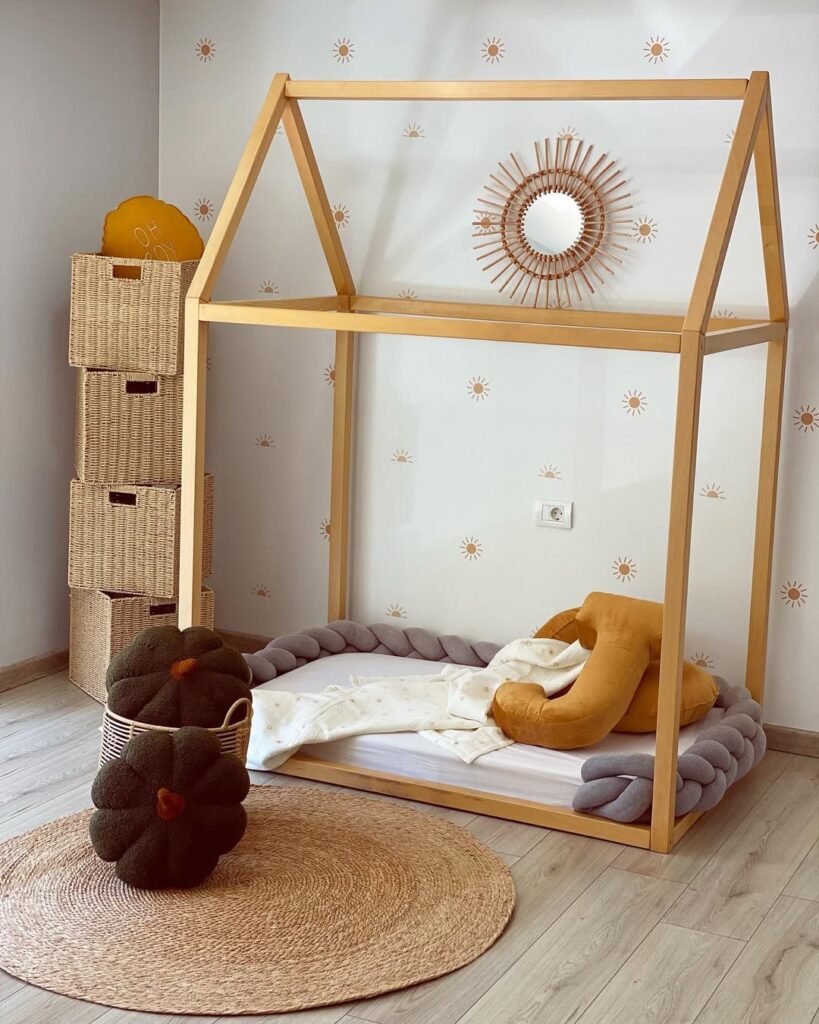
A simple wooden house frame sits over a low mattress, keeping everything close to the ground. Small sun patterns on the wall add a cheerful touch without overwhelming the space. A round mirror brings light and depth to the setup.
Soft cushions and a braided bumper create a safe sleeping area. Woven baskets stacked nearby offer easy storage for toys and essentials.
15. Corner Floor Bed With Soft Lighting
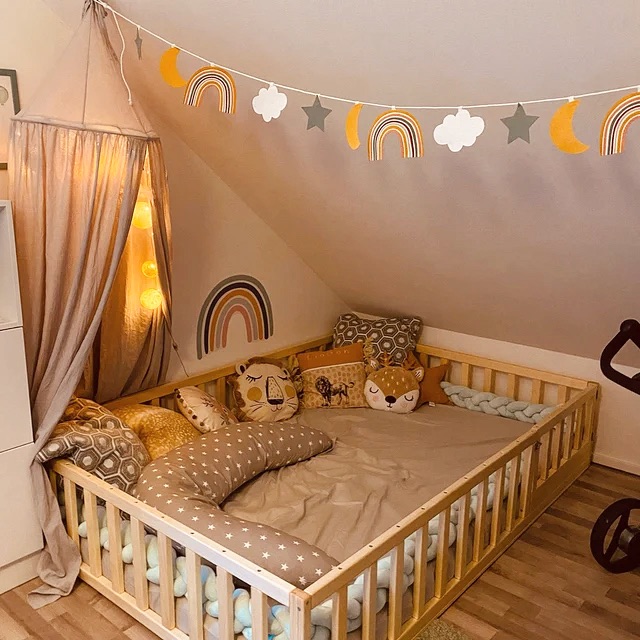
A low bed frame fits neatly into the corner, creating a cozy sleeping nook. Soft string lights and a fabric curtain add warmth and a gentle glow.
Plush pillows and soft bedding make the space inviting for rest. Wall decor and hanging accents bring a playful feel while keeping the layout simple.
16. Attic Style Floor Bed With Wall Accent
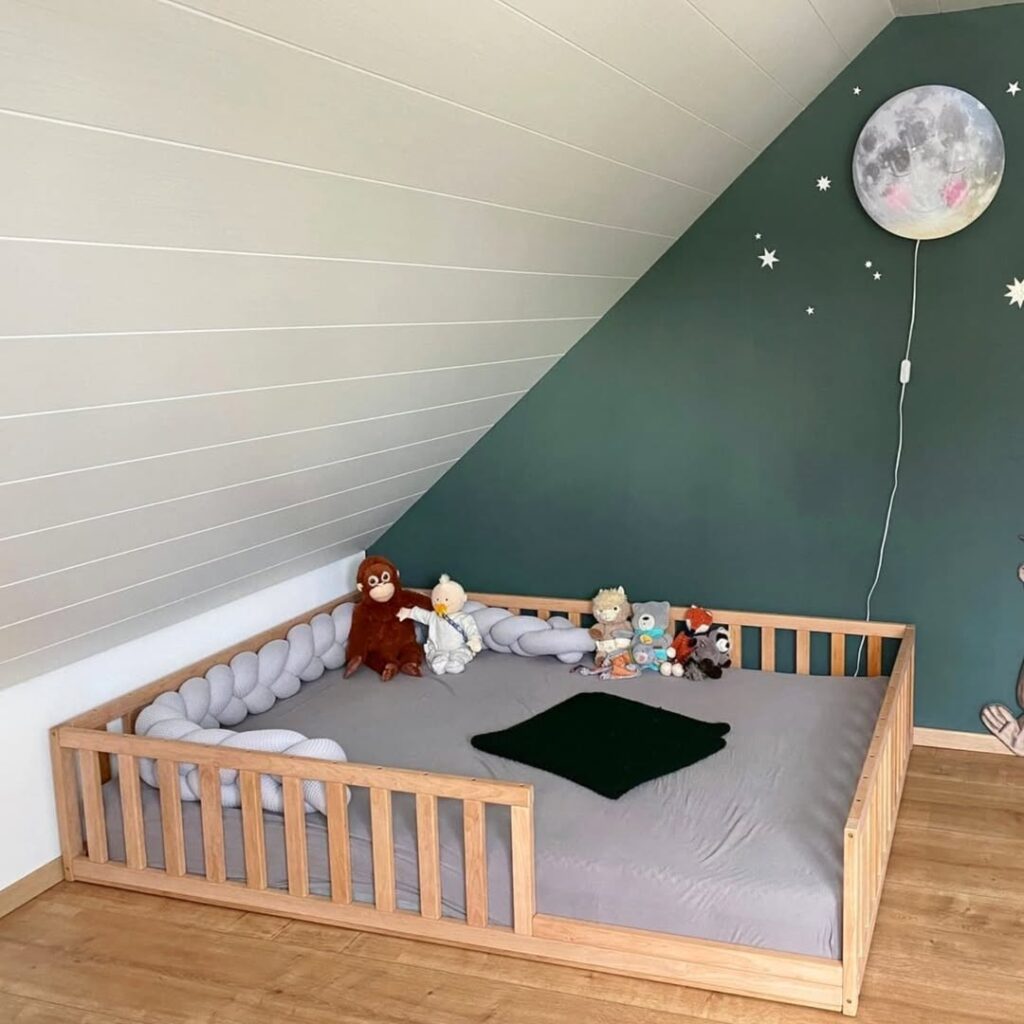
A floor bed sits under a sloped ceiling, making use of the attic space. A bold green wall with moon decor adds character without crowding the area.
Stuffed toys line the edge, keeping them within reach. The open layout allows movement while still feeling calm and organized.
17. Soft Canopy Floor Bed With Floral Details
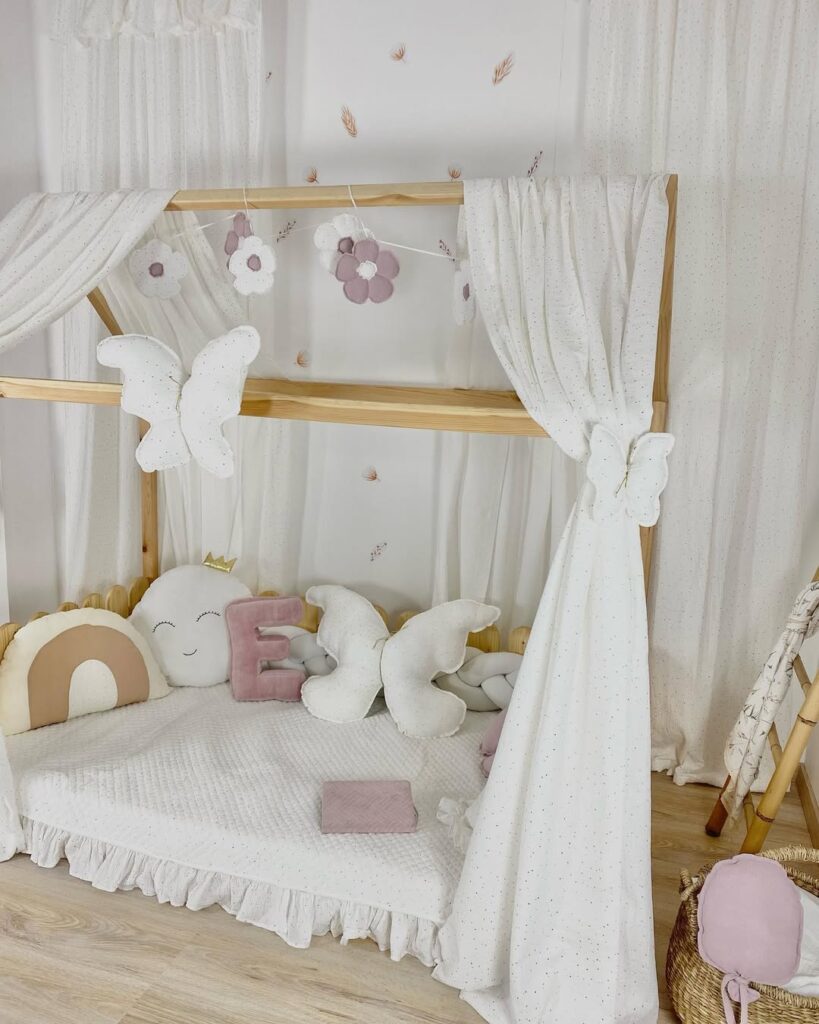
Light fabric drapes surround a low house frame, creating a gentle and airy look. Hanging flower decor adds a soft and playful touch to the setup.
Pillows and cushions fill the bed, making it comfortable for both sleep and quiet play. The neutral tones keep the room calm and balanced.
18. House Frame Bed With Striped Accent Wall
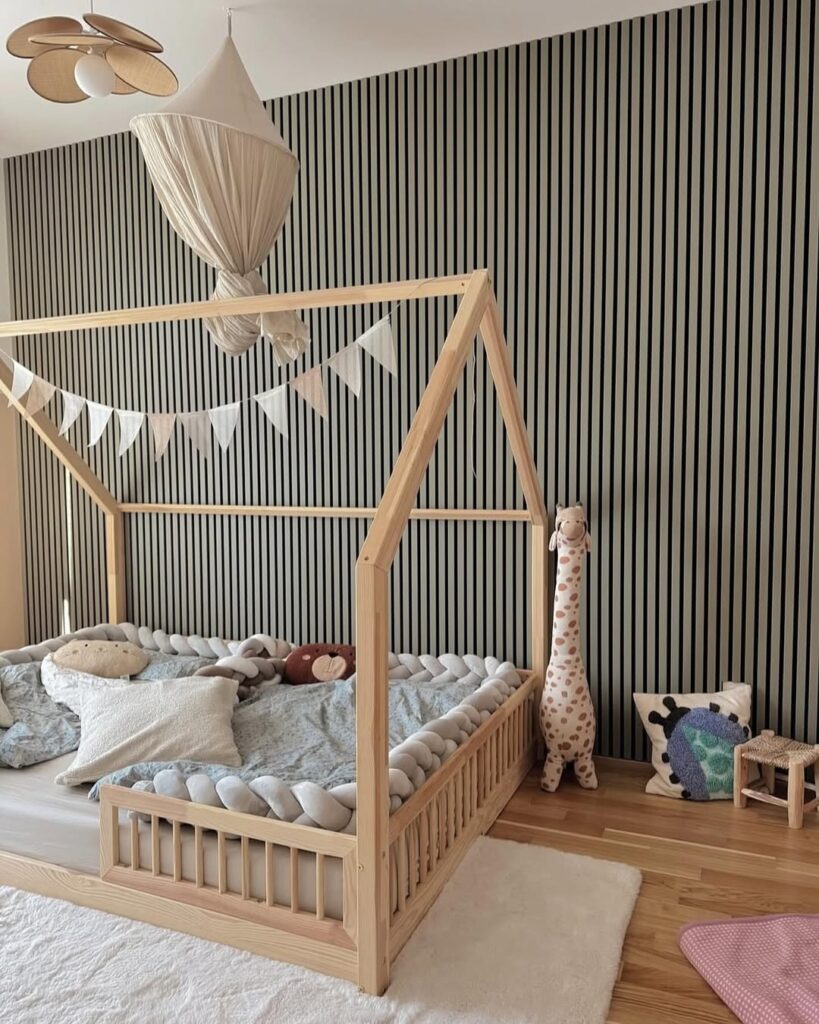
A wooden house frame stands out against a bold striped wall. The low bed design keeps access easy while still feeling structured.
Soft bedding and cushions add comfort without clutter. A few toys and decor pieces nearby keep the space engaging yet tidy.
19. Cloud Wall House Frame Bed
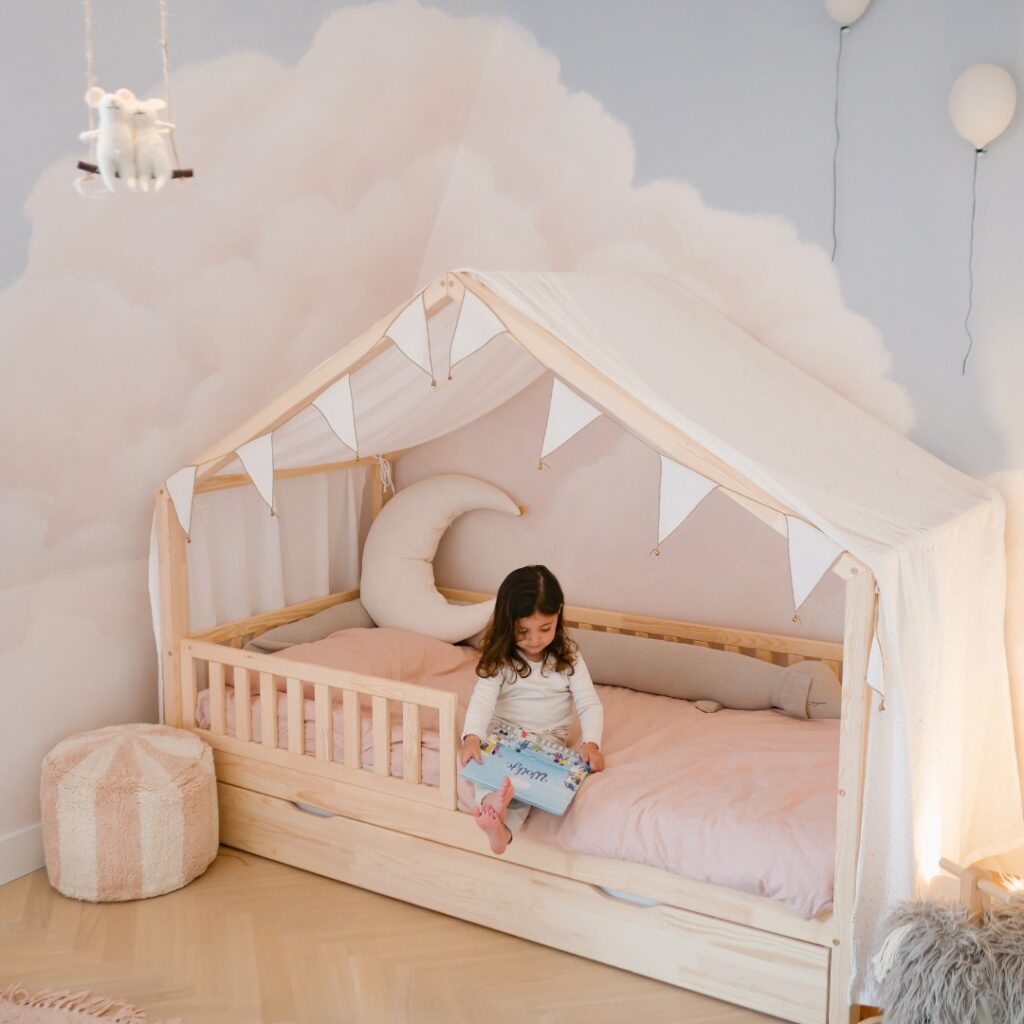
A soft cloud-painted wall sets a calm backdrop for a wooden house frame bed. Light fabric drapes and small bunting add a gentle decorative touch without clutter.
A child sits comfortably with a book, showing how the space supports quiet moments. The low structure keeps access easy while still feeling cozy and enclosed.
20. Twin Floor Beds With World Map Wall
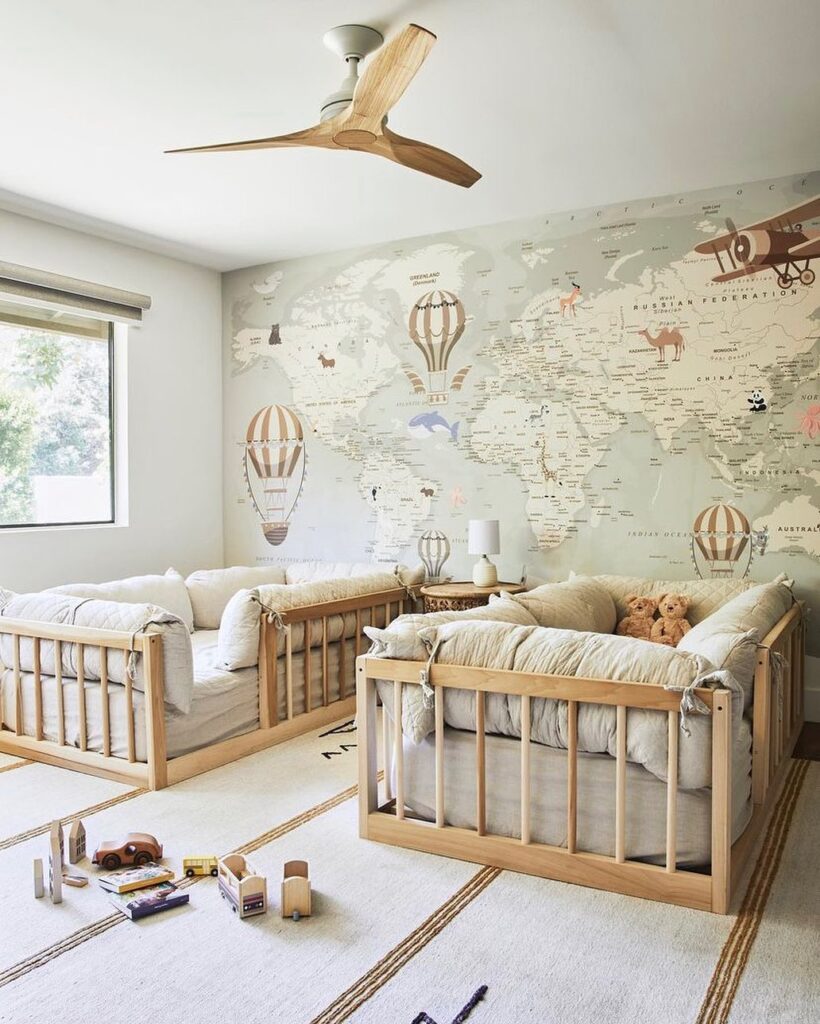
Two low beds with wooden rails create a shared setup that feels open and organized. A large world map mural adds visual interest and learning value to the room.
Soft bedding and neutral tones keep the space calm. Toys placed on the floor stay within reach, encouraging independent play.
21. Simple Montessori Floor Bed With Calm Colors
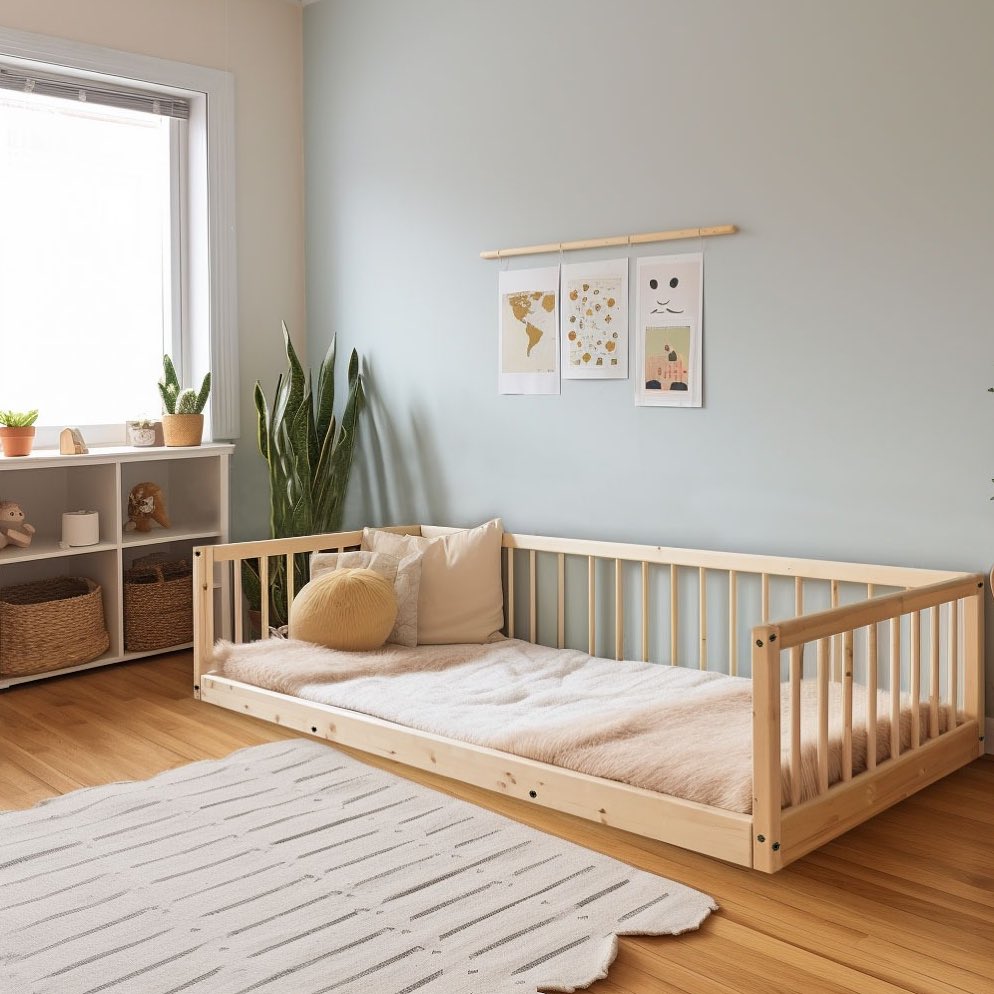
A low wooden bed sits against a soft blue wall, creating a clean and peaceful look. Minimal decor keeps the focus on comfort and function.
A nearby shelf holds baskets and small items for easy access. Plants by the window add a natural touch while keeping the space fresh.
22. House Frame Bunk Bed With Play Corner
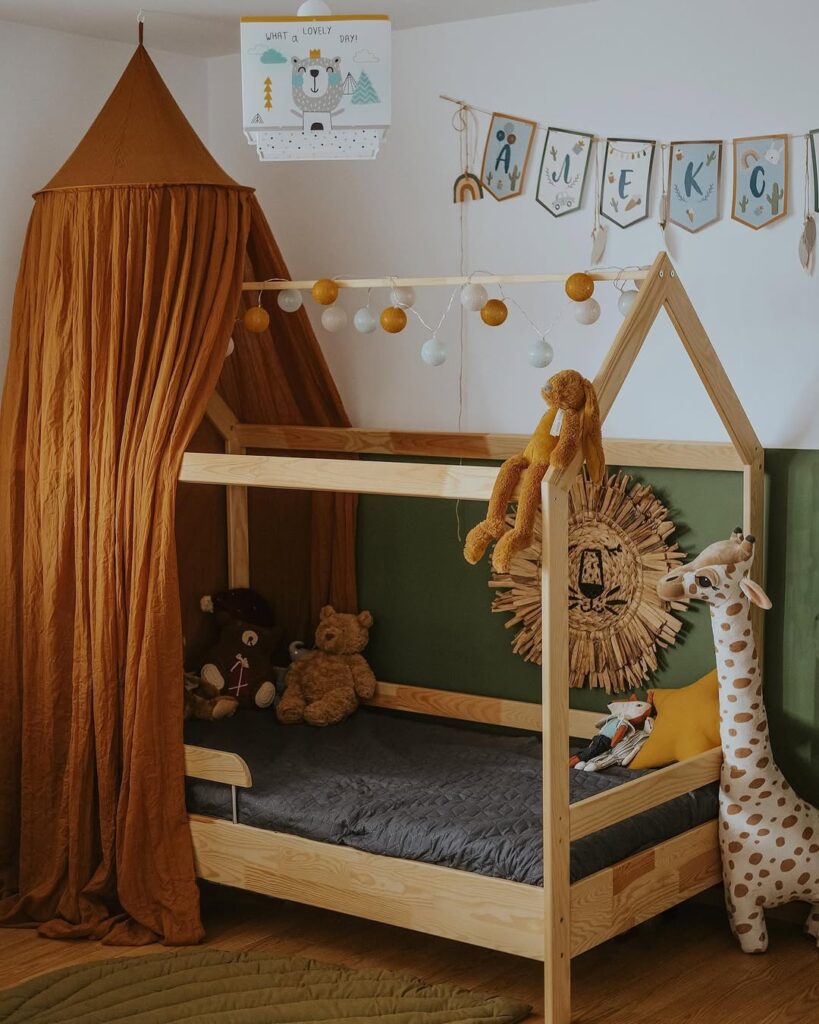
A two level wooden frame combines sleep and play in one area. A fabric canopy on one side creates a quiet hideout beneath the structure.
Soft lights and hanging decor bring warmth to the setup. Toys and plush items sit nearby, making the space inviting and functional.
23. Open Floor Bed With Reading Nook And Tent
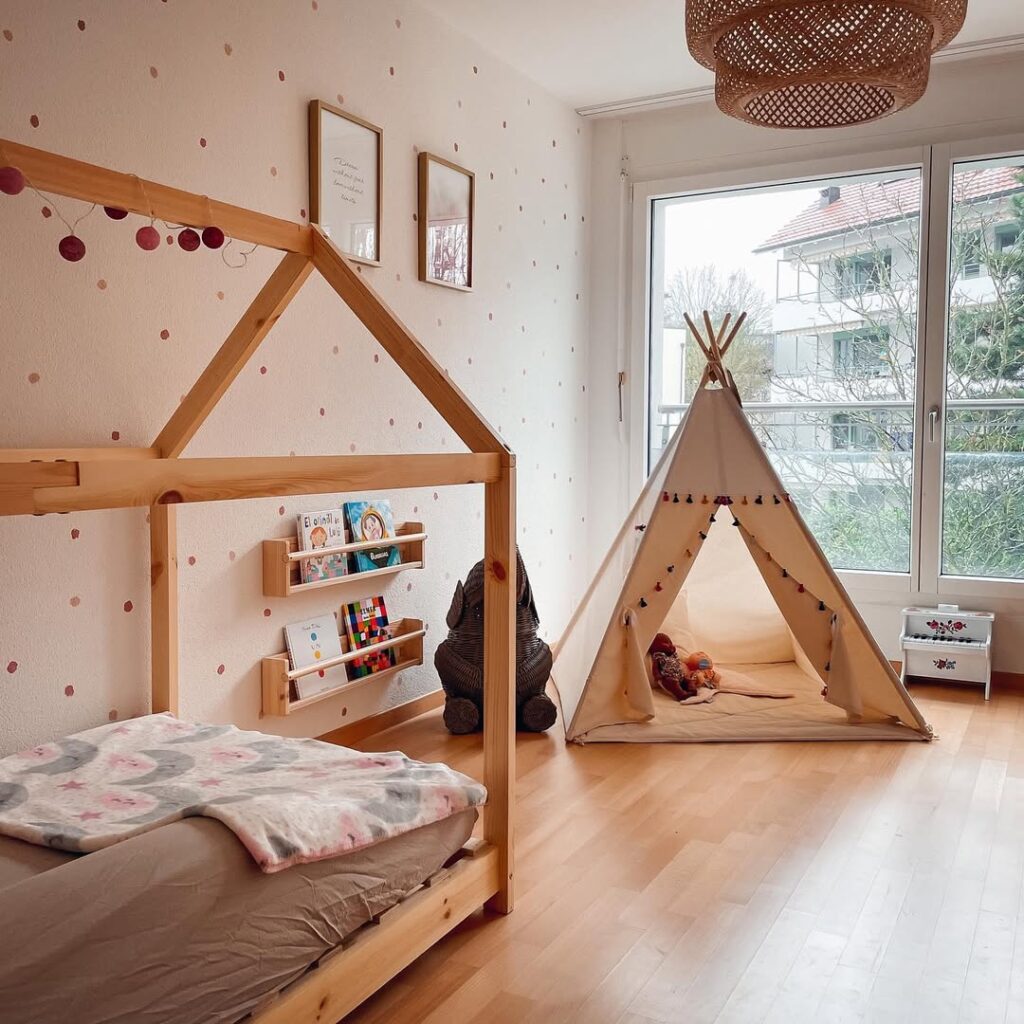
A simple house frame bed sits low to the floor, allowing free movement around the room. A small wall shelf displays books at an easy-to-reach height.
A teepee tent nearby creates a separate reading or play space. Natural light fills the room, keeping it bright and welcoming.
FAQ
What Is A Montessori Room Setup?
A Montessori room is designed to support independence by keeping everything within a child’s reach. It usually includes low furniture, open shelves, and simple organization.
The goal is to create a space where children can move freely and choose activities on their own. Keeping the setup clear and simple helps them understand and use the space easily.
What Furniture Is Needed For A Montessori Room?
Basic items include a low bed, open shelving, and a small table or chair. These pieces allow children to access their belongings without help.
Choosing simple and lightweight furniture makes it easier for them to move and use items safely. Keeping only what is needed helps avoid clutter.
How Do You Keep A Montessori Room Organized?
Using baskets, trays, and open shelves helps keep items visible and easy to reach. Grouping similar toys or materials makes cleanup simpler.
Rotating toys every few weeks can also help keep the space tidy and engaging. A clear system helps children learn to organize on their own.
Can A Montessori Room Work In A Small Space?
Yes, a Montessori setup can work well even in small rooms. The focus is on simplicity and accessibility rather than size.
Using fewer items and keeping the layout open can make the space feel larger. Thoughtful placement helps maintain both function and comfort.
How Do You Make A Montessori Room Safe For Kids?
Safety comes from keeping furniture stable, avoiding sharp edges, and placing items at a child-friendly height. Soft rugs and clear walking space can also help prevent accidents.
Choosing safe materials and keeping the room uncluttered makes it easier for children to move around confidently.
Helpful Next Steps For Parents
• Whimsical Nursery Ideas
• Nursery Organization Ideas
Conclusion
A Montessori room creates a calm and practical space that supports independence and everyday learning. With simple furniture and clear organization, children can move freely and take part in their daily routine.
Keeping the setup minimal and accessible helps everything feel easy to manage over time.
Share these ideas with friends and family so they can create a space that feels organized, functional, and supportive for their child.