21 Easy Science Experiments You Can Do with Items from Your Pantry

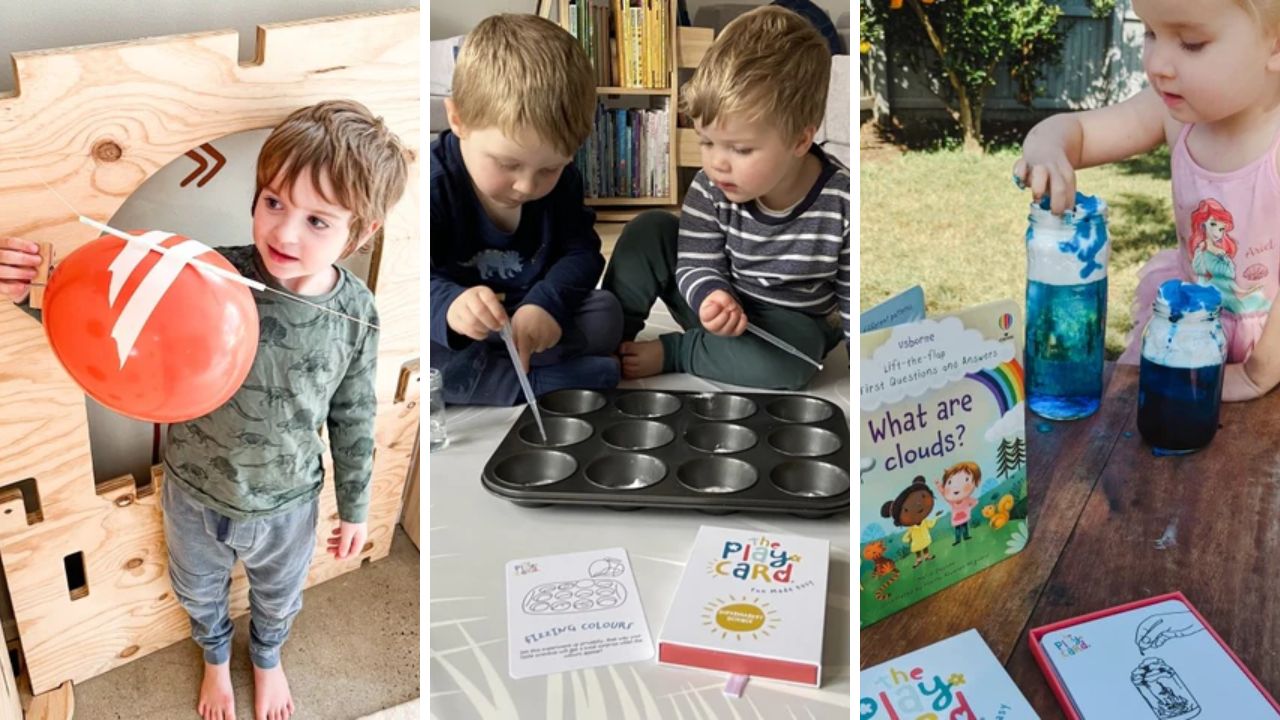
Some days, parenting feels like a balancing act between keeping kids entertained and not completely losing your sanity. If screens are already overused and the weather is not cooperating, science experiments can be the perfect middle ground.
The best part is that you do not need a science kit or special supplies. Your pantry, fridge, and junk drawer already hold everything you need.
These experiments are hands-on, curiosity-driven, and designed to spark real learning. Kids are not just watching something happen. They are predicting, testing, reacting, and asking questions. That is where the magic lives.
Yes, some of these get messy. That is part of the deal. Science is rarely tidy, and kids remember it more when it is not.
Big Science for Little Labs
21 Hands-On Discovery Experiments
Exploding Bag
Observe chemical reactions and gas production.
Dancing Raisins
Learn about buoyancy and density.
Milk Explosion
Break surface tension with soap and fat.
Invisible Ink
Discover oxidation and heat changes.
Bottle Tornado
Model vortex formation and weather.
Lava Lamp
Watch immiscible liquids and density.
Walking Water
Visualize capillary action and absorption.
Elephant Toothpaste
High-energy catalyst reactions.
Crystal Garden
Observe evaporation and crystal growth.
Oobleck
Explore non-Newtonian states of matter.
Balloon Rocket
Test propulsion and force.
Density Tower
Stack liquids by molecular density.
Magic Milk Paper
Historical chemical reveal techniques.
Jumping Pepper
Instant surface tension demonstration.
Naked Egg
Use acid to dissolve calcium shells.
Coloring Celery
Watch xylem transport in plants.
Bagged Ice Cream
Lower freezing points with salt.
Floating Egg
Change water buoyancy with salt.
Static Butterfly
Control invisible electrical forces.
Paper Bridge
Applied engineering and structural load.
Sink or Float
Develop scientific reasoning and prediction.
1. The Exploding Bag Experiment
This is one of those experiments that immediately grabs attention.
You place baking soda into a small tissue or paper towel and pour vinegar into a zip-top bag. Once the tissue goes in and the bag is sealed, the reaction starts fast. The bag begins to swell as gas forms inside.
Kids love watching the bag inflate because it feels dramatic and unpredictable. This is a great opportunity to pause and ask what they think will happen next before sealing the bag.
From a learning standpoint, this experiment introduces chemical reactions and gas production in a very visual way. Kids can actually see the result of molecules interacting.
Parent tip: Do this outside or over a sink, and talk through what causes the pressure to build.
2. Dancing Raisins
At first glance, this one looks almost too simple to be interesting. Then the raisins start moving.
Drop a few raisins into a clear glass of soda and watch closely. Bubbles form on the surface of the raisins, lifting them upward. When the bubbles pop, the raisins sink again, only to repeat the process.
Kids are usually mesmerized by the motion and want to know why it keeps happening. That curiosity opens the door to conversations about gas, buoyancy, and density.
You can deepen the experiment by testing different liquids and asking which one makes the raisins move the most.
3. Colorful Milk Explosion
This experiment looks like pure magic, but there is real science behind it.
Pour whole milk into a shallow dish and add drops of food coloring around the surface. When you touch the milk with a cotton swab dipped in dish soap, the colors burst outward in swirling patterns.
What kids are seeing is the soap interacting with the fat molecules in the milk, breaking surface tension and sending the colors racing.
This is a great experiment for kids who love art as much as science. It feels creative, expressive, and exciting all at once.
4. Invisible Ink Messages
Kids love anything secret, and this experiment leans right into that.
Using a cotton swab dipped in lemon juice, kids write messages on white paper. Once the juice dries, the message disappears completely. When the paper is gently heated, the writing slowly reappears.
This experiment is perfect for slowing things down and building patience. It also introduces oxidation and chemical changes caused by heat.
Adult supervision is important here, but kids feel very grown-up being trusted with a classic spy trick.
5. Tornado in a Bottle
Weather fascinates kids, especially when it feels powerful.
Fill a plastic bottle with water, add a drop of dish soap, seal it tightly, and swirl it upside down. A spinning vortex forms inside the bottle, mimicking a tornado.
Kids love controlling the storm by changing how fast they spin the bottle. You can talk about how real tornadoes form and why spinning air behaves the way it does.
Adding glitter makes the movement easier to see and adds extra excitement.
6. Homemade Lava Lamp
This experiment has serious wow factor.
You layer water and oil in a clear bottle, add food coloring, and drop in part of an Alka Seltzer tablet. Colored bubbles rise and fall through the oil like a lava lamp.
Kids quickly notice that the liquids do not mix and begin asking why. This is a great time to talk about density and chemical reactions without turning it into a lecture.
It is mesmerizing enough that kids often sit and watch longer than you expect.
7. Walking Water Experiment
This one teaches patience, which is a skill all on its own.
Fill two glasses with colored water and place an empty glass between them. Fold paper towels so they connect the glasses. Over time, the water slowly travels up and across into the empty glass.
This experiment does not happen instantly, which makes it perfect for checking back throughout the day. Kids feel proud when they see progress over time.
It introduces absorption and capillary action in a very calm, visual way.
8. Elephant Toothpaste
This is big, messy, and unforgettable.
When yeast, warm water, dish soap, and hydrogen peroxide mix, foam erupts rapidly from the container. Kids usually gasp the first time they see it.
This experiment is excellent for kids who need movement and excitement to stay engaged. It shows how catalysts speed up chemical reactions and release oxygen.
Definitely an outdoor activity, but one kids will talk about for days.
9. Crystal Garden
This experiment rewards patience and observation.
By dissolving Epsom salt in warm water and letting it evaporate over porous rocks, crystals slowly form. Kids get to see growth happen over time rather than instantly.
This is a great opportunity to talk about evaporation, solutions, and how crystals form naturally.
Taking photos each day helps kids track changes and stay invested.
10. Oobleck
Oobleck is pure sensory fun.
Mixing cornstarch and water creates a substance that behaves like a liquid until pressure is applied, then suddenly feels solid.
Kids cannot stop poking it, squeezing it, and testing it. That curiosity leads naturally into conversations about states of matter.
This experiment works especially well for kids who learn best through touch.
11. Balloon Rocket
This experiment feels like play, but it is packed with physics.
A balloon taped to a straw on a string zooms across the room when released. Kids love experimenting with different balloon sizes and string angles.
It introduces propulsion, force, and motion without any complicated explanations.
Let kids redesign it and test new ideas to deepen learning.
12. Density Tower
Layering liquids in a clear container never gets old.
Honey, dish soap, water, and oil stack neatly on top of each other, and kids are fascinated that they do not mix.
Dropping small objects into the layers encourages prediction and critical thinking.
This experiment blends science with visual beauty, which helps it stick.
13. Magic Milk Paper
Soaking paper in milk and later revealing writing with heat creates an old-fashioned parchment effect kids love.
It feels historical, mysterious, and scientific all at once.
Pair this with storytelling or a treasure hunt for extra engagement.
14. Jumping Pepper
This quick experiment delivers instant results.
When soap touches water covered in pepper, the pepper races away. Kids immediately want to repeat it.
It clearly demonstrates surface tension and cause and effect.
Simple, fast, and surprisingly powerful.
15. Naked Egg Experiment
Soaking an egg in vinegar dissolves the shell and leaves behind a bouncy membrane.
Kids are always amazed that the egg feels rubbery instead of fragile.
This experiment opens conversations about acids, calcium, and protective layers.
16. Color Changing Celery
This slow experiment teaches kids to observe over days rather than minutes.
Celery stalks placed in colored water slowly change as the dye travels upward through the plant.
Cutting the stalk open at the end reveals how water moves inside plants.
17. Homemade Ice Cream in a Bag
This is always a favorite.
Kids shake a bag filled with milk, sugar, and vanilla inside ice and salt until it freezes into ice cream.
They learn about freezing points and physical changes, but mostly they love eating the results.
Let the kids do the shaking. They burn energy and feel proud.
18. Floating Egg Test
Placing an egg in fresh water versus salt water sparks instant curiosity.
Kids quickly notice the difference and want to test other liquids.
This experiment introduces density and buoyancy in a very tangible way.
19. Static Electricity Butterfly
Light tissue paper shapes lift and move when static electricity builds on a balloon.
Kids love controlling the movement and testing different materials.
This is a great intro to invisible forces.
20. Paper Bridge Challenge
Building a bridge from paper that can hold weight encourages problem-solving and engineering thinking.
Kids experiment with folding, layering, and structure.
Failure becomes part of learning, which is incredibly valuable.
21. Sink or Float Predictions
Testing everyday objects in water is simple but powerful.
Kids make predictions, test them, and adjust their thinking based on results.
This builds scientific reasoning and confidence.
Why This Kind of Science Matters
These experiments are not about memorizing facts. They are about curiosity, confidence, and discovery.
Kids learn that questions are welcome, mistakes are useful, and learning can be fun.
That mindset lasts longer than any worksheet ever will.
You may like to read!