
How To Teach A Child To Write: Secrets To Building Writing Confidence Early

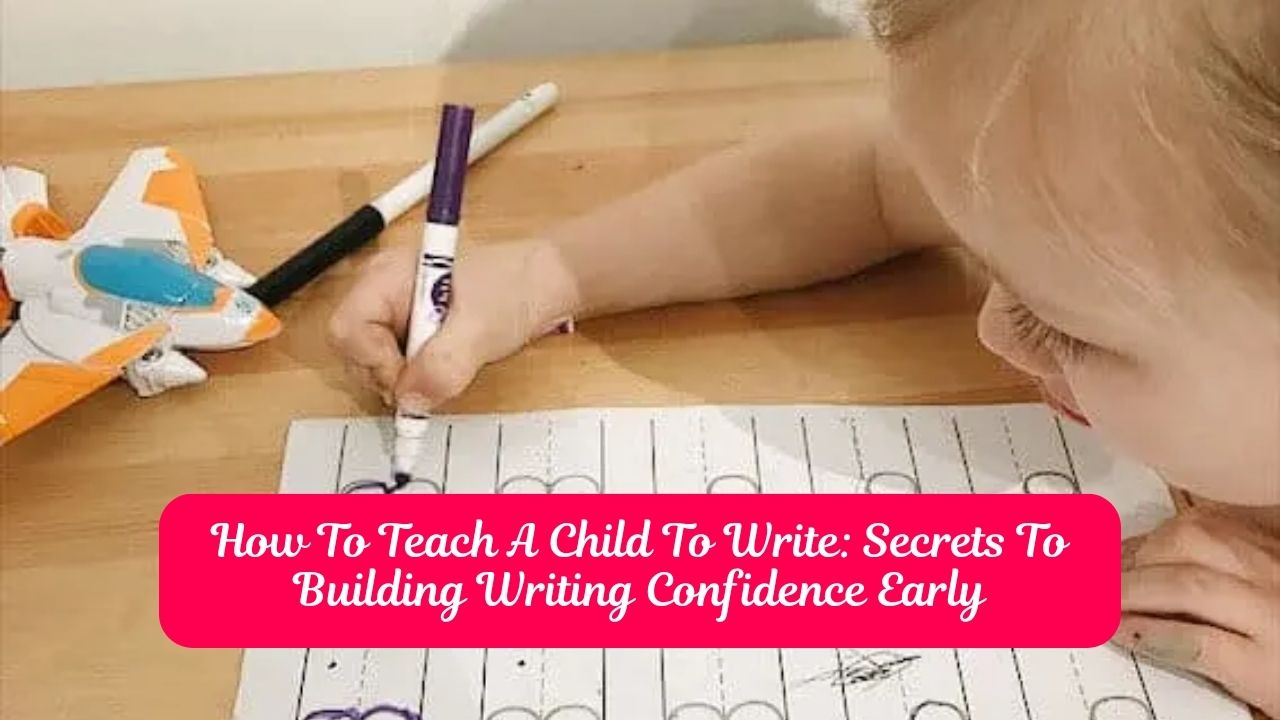
Watching a child learn to write is one of those quiet parenting moments that stays with you forever. One day, it’s scribbles that make sense only to them. Then suddenly, those marks turn into letters, words, and stories filled with meaning.
Many parents ask the same question I’ve heard for years in classrooms and parent meetings alike:
How do I teach my child to write without pushing too hard or doing it wrong?
The good news is that writing does not begin with worksheets or perfect letters. It begins much earlier, long before a pencil is ever held correctly. Writing grows out of movement, play, language, and confidence.
This guide will walk you through how writing develops, why some children struggle, and how to support your child in a way that builds skill without pressure.
TL;DR
Teaching a child to write is a gradual process that starts with play, movement, and confidence. Focus on fine motor strength, meaningful writing experiences, phonics, and encouragement.
Avoid rushing letter formation or correcting every mistake early on. Writing develops best when children feel safe, supported, and excited to express themselves.
Why Many Children Struggle With Writing At First
The Path to Writing
Coordinating Complex Skills
Exploration & Motion
Scribbling and fist grips are expected. These movements build the essential hand strength for later control.
Intentional Marks
Letters and numbers appear mixed with art. Children start assigning meaning to their own unique symbols.
Refinement & Intent
Pencil grip stabilizes and formation improves. Writing becomes controlled and detailed as the foundation settles.
Reminder: Every child develops at a different pace. Writing is not a race.
If your child resists writing or seems behind, it does not mean something is wrong. Writing is one of the most complex skills young children learn.
It requires coordination between hand strength, motor control, language development, memory, and confidence.
Every child develops these skills at a different pace.
Comparing your child to classmates or siblings often creates unnecessary anxiety. Writing is not a race. Some children talk early and write later. Others draw in detail before forming letters. All of these paths are normal.
In early childhood education, we see three broad stages of writing development:
Ages 0 to 3
Children experiment with marks and movement. Scribbling, large strokes, and fist grips are expected. These movements build essential hand strength.
Ages 3 to 5
Drawings become more intentional. Letters and numbers appear, often mixed with pictures. Children begin assigning meaning to their marks even if adults cannot read them.
Age 6 and beyond
Writing becomes more controlled and detailed. Letter formation improves, pencil grip stabilizes, and children write with clear intent.
These stages overlap, and children move between them at different speeds. The most important thing is not to rush ahead before the foundation is ready.
Step One: Preparing Your Child To Write
Writing readiness starts long before formal instruction.
Children need strong hands, flexible fingers, and confidence using tools. These skills are developed through play, not drills.
Activities that support writing readiness include:
- Drawing with crayons, chalk, and markers
- Painting with large brushes
- Playing with clay or dough
- Tearing paper, threading beads, building blocks
- Making large circular movements on paper or pavement
Large movements strengthen muscles that later control fine writing motions. This is why big paper and chunky tools are ideal in early years.
Your home environment matters too. When children see adults write shopping lists, notes, and messages, they begin to understand that writing has purpose. Involving them in everyday writing tasks gives writing meaning.
Role play is especially powerful. A pretend shop, restaurant, or train station naturally invites writing tickets, signs, menus, and lists. Even if it starts as scribbles, children are learning that writing communicates ideas.
Step Two: Introducing Writing Gently
Once your child is comfortable making marks and holding tools, you can begin introducing letters and early writing concepts.
This stage should still feel playful and pressure free.
Helpful strategies include:
- Letter puzzles and magnetic letters
- Tracing letters using fingers, not just pencils
- Writing names and familiar words together
- Singing songs and rhymes that highlight letter sounds
- Reading daily and pointing out words naturally
Praise effort rather than accuracy. Confidence matters more than perfect letters at this stage. Children who feel safe making mistakes are far more likely to keep trying.
Why Correction Can Do More Harm Than Good
One of the most common mistakes parents make is correcting too much, too early.
Early writing is about flow. Children need to feel that writing is something they can do, not something they constantly get wrong.
Correcting every letter, spacing issue, or spelling attempt interrupts that flow. Over time, it can make children anxious or resistant to writing altogether.
Think about how we respond when toddlers mispronounce words. We do not correct every sound. We model correct language gently. Writing should be treated the same way.
The one area worth gently guiding early is pencil grip. Helping a child move from a fist grip to a more functional grip supports comfort and endurance later on. This should be encouraged patiently, not forced.
Using Phonics To Support Writing
Phonics plays a critical role in writing development.
When children understand letter sounds, they can begin writing words even before they spell them correctly. Early writing often looks like this:
- Writing the first sound of a word
- Writing beginning and ending sounds
- Gradually adding middle sounds
- Learning irregular words later
This progression is healthy and expected.
Teaching only letter names without sounds makes writing much harder. Children may know the alphabet song but feel stuck when trying to write words. Teaching letter sounds alongside names gives children tools to spell independently.
Free phonics games, reading programs, and playful sound activities can support this process naturally.
When Letter Formation Is Messy
Messy letters are normal.
Writing requires precision that takes years to develop. Young children often write letters backward, unevenly, or inconsistently. This is not a sign of failure.
Rather than correcting on paper, model the correct formation beside them. A whiteboard is excellent for demonstrating letters without pressure.
Formal correction becomes more appropriate around age six or later, once children have developed control and confidence.
Making Writing Fun Instead Of Forced
Children who resist writing are often reacting to pressure, not inability.
Writing becomes inviting when it connects to a child’s interests. Dinosaurs, superheroes, animals, princesses, vehicles, or sports can all inspire writing.
Simple ideas include:
- Writing letters to favorite characters
- Making books about their day
- Labeling drawings
- Writing menus, maps, or treasure lists
- Playing letter games instead of using worksheets
Hands on activities almost always outperform worksheets for young children. Writing should feel like exploration, not obligation.
If Your Child Still Does Not Want To Write
Some children need more time.
Establishing gentle routines helps. Writing alongside your child, rather than directing them, makes a difference. When children see adults enjoying reading and writing, they naturally become curious.
The goal is not early perfection. The goal is confidence and curiosity.
Children who enjoy writing will practice. Children who feel pressured will avoid it.
The Long View
Writing is a lifelong skill built gradually.
Your role is not to rush the process but to create the conditions where writing feels safe, meaningful, and enjoyable. Confidence always comes before mastery.
If your child feels supported, celebrated, and encouraged, the mechanics will follow.
Every strong writer starts as a child, making marks that only they understand.