How Important Are Open-Ended Questions for Kids?

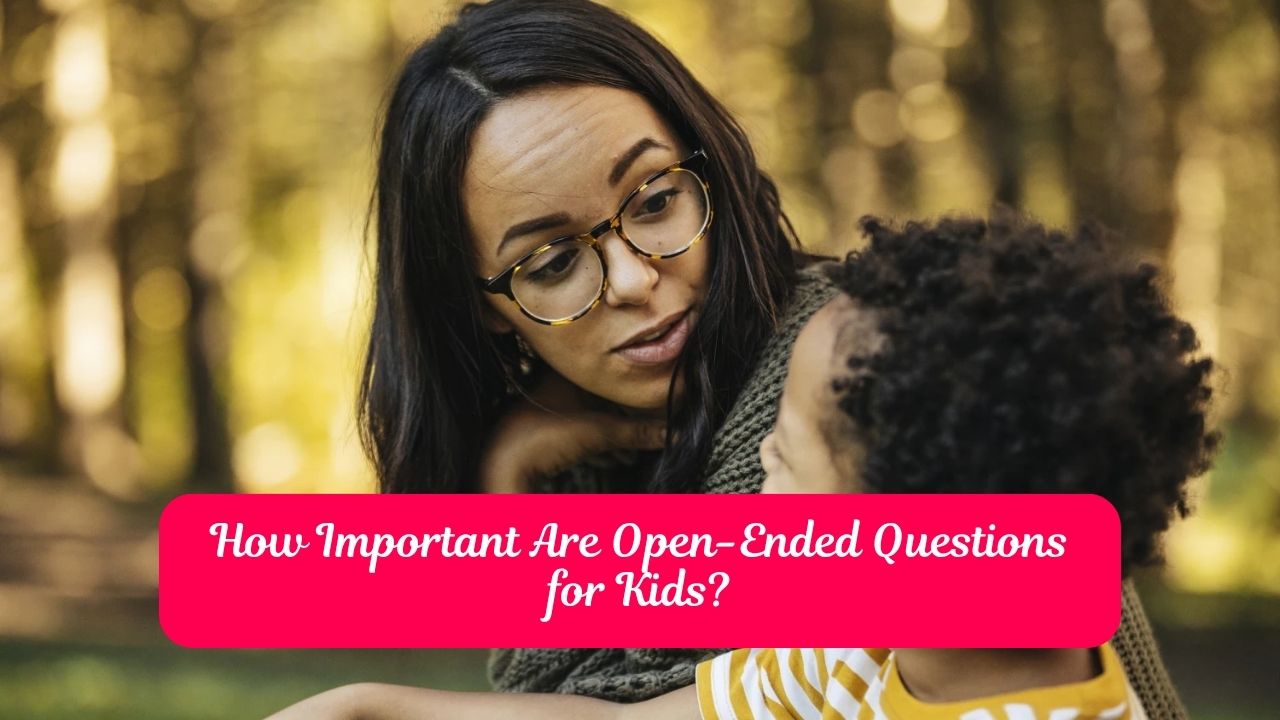
If you are looking for a simple parenting habit that quietly shapes your child’s thinking, communication, and confidence, this is one of the most powerful places to start.
Asking open-ended questions.
They may seem small, but open-ended questions play a big role in how children learn to think, express ideas, and make sense of the world. Over time, they influence how children approach learning, problem-solving, and even relationships.
The Power of “How” & “Why”
Encourage Critical Thinking
Open questions invite kids to explain, imagine, and reflect rather than offering a simple “yes” or “no.”
Shift the Dynamic
Instead of “Did you have a good day?”, try “What made you feel proud today?” to spark real conversation.
Support Brain Development
This habit builds thinking patterns for organizing thoughts and solving complex problems later in life.
Integrate Naturally
Use phrases like “What do you notice?” or “Tell me more” to foster curiosity during everyday play.
In this article, we will explore why open-ended questions are so important for children, how they support healthy development, and how you can naturally use them in everyday life without turning conversations into lectures.
Why Open-Ended Questions Matter
Open-ended questions invite children to explain, describe, imagine, and reflect. Instead of answering with a simple yes or no, children are encouraged to think more deeply and express themselves more fully.
This process strengthens:
- Language development
- Critical thinking skills
- Emotional awareness
- Confidence in communication
Unlike closed questions, open-ended questions give children space to explore their own ideas rather than relying on adults to supply answers.
The Difference Between Open and Closed Questions
Closed questions usually lead to very short responses. Parents often ask things like:
- Did you have a good day at school
- Did you like your lunch
- Are you happy
These questions are not harmful, but they do not encourage much thinking or conversation. A child can respond with one word and move on.
Open-ended questions change the dynamic. They invite the child to participate, explain, and reflect.
For example:
- What was your favorite part of today
- What made you feel proud today
- Can you tell me about something new you learned
The difference may seem small, but the impact on learning and communication is significant.
How Open-Ended Questions Support Brain Development
Early childhood is not about memorizing facts. It is about building thinking habits that children will use throughout their lives.
When children are asked open-ended questions, they practice:
- Organizing thoughts
- Making connections
- Using language to explain meaning
- Considering different possibilities
These skills form the foundation for reasoning, creativity, and problem-solving later in life.
As children grow, they will face situations that do not have simple answers. Open-ended questioning prepares them for that complexity by teaching them how to think rather than what to think.
Why Parents Often Rely on Closed Questions
Closed questions are quick and convenient. They fit easily into busy routines and often feel more efficient.
However, learning is not always efficient.
Just as educators choose activities based on learning value rather than convenience, conversations with children benefit from intention.
Adding more open-ended questions does not mean every conversation needs to be long or serious. It simply means creating space for children to express themselves when it matters.
How to Ask More Open-Ended Questions Naturally
You do not need special scripts or training. Small changes in wording make a big difference.
Instead of:
- How was school
Try:
- What was the most interesting thing you did at school
Instead of:
- Did you like the book
Try:
- What part of the story stood out to you
Instead of immediately answering your child’s questions, try asking a question back first.
If your child asks how something works, you might say:
- What do you think is happening
- What do you notice
- Why do you think that happens
This approach encourages curiosity and independent thinking before information is provided.
The Power of Letting Children Explain
Sometimes, pretending not to know everything can be helpful.
When children feel they are explaining something to an adult, they often use more detailed language and clearer reasoning. This builds confidence and communication skills.
The goal is not to withhold information, but to allow children time to think, explore, and express ideas before receiving answers.
Using Open-Ended Questions in Everyday Life
Open-ended questions can be woven into daily routines without effort.
While reading together:
- What do you think will happen next
- Why do you think the character did that
During play:
- How could we build this another way
- What might happen if we change this
When solving problems:
- How could we check that answer
- What else could we try
These moments encourage children to take ownership of their thinking.
Balance and Variety Matter
Asking “why” is useful, but repeating it too often can feel overwhelming. Variety keeps conversations natural and engaging.
Try mixing in:
- How
- What if
- Tell me about
- What do you notice
You do not need to ask open-ended questions all day. Choosing meaningful moments is enough to make a difference.
Final Thoughts
Open-ended questions are one of the most effective and overlooked parenting tools.
They help children feel heard, valued, and confident in expressing their thoughts. Over time, they lead to richer conversations, stronger language skills, and deeper thinking.
You do not need to be perfect or ask them constantly. Being intentional is enough.
Small changes in how we talk to our children can shape how they think for years to come.