Setting Boundaries for Toddlers: 10 Gentle Ways That Really Work

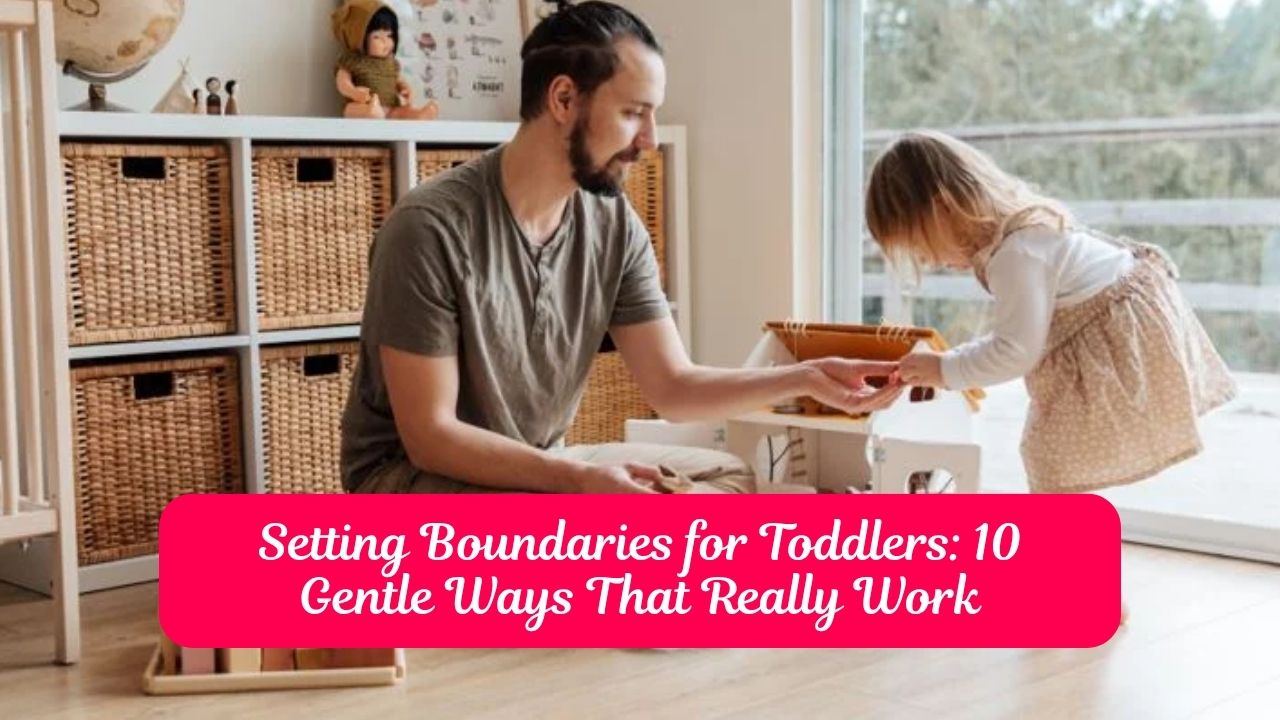
Setting boundaries for toddlers can feel like a full-time job. One minute, your child is laughing and playing, and the next, they are testing every rule you just explained. If you ever feel tired, frustrated, or unsure, you are not alone.
Boundaries are not about being strict or controlling. They are about helping toddlers understand what is safe, what is kind, and what is expected. Clear boundaries help children feel secure and loved, even when they push back.
Here are ten gentle and practical ways to set boundaries that work in real life.
Why boundaries are so important for toddlers
Toddlers are learning how the world works. They do not yet understand why some things are okay and others are not. Their job is to explore, test limits, and learn from reactions.
Boundaries help toddlers feel safe. When expectations stay the same, children begin to understand what will happen next. This helps them make better choices over time.
Gentle Boundaries
Freedom Within the Fence
1. Keep it Simple
Use short phrases like “Gentle hands” or “Bodies safe.” Toddlers can only hold 3-5 core rules in their working memory.
2. Start Early
Don’t wait for “naughty” behavior. Guide them as soon as curiosity leads them toward a boundary.
3. Radical Consistency
Expectations shouldn’t change with your mood. A steady “yes” or “no” builds deep psychological safety.
4. Calm Follow-Through
Actions teach more than lectures. If a toy is thrown, calmly remove the toy. Show, don’t just tell.
5. Repeat Without Heat
Repetition is how they learn. Treat each “infraction” as a new lesson rather than a personal slight.
8. Natural Consequences
Keep the result related to the action. If they color on the wall, the markers take a break.
7. Offer Choices
Building independence reduces pushback. “Blue cup or red cup?” gives them power within your plan.
9. Notice the “Good”
Praise specific actions. “You shared that block” reinforces the behavior you want to see again.
10. Personal Grace
You can comfort an upset child while still holding the boundary. Connection and limits coexist.
Learning boundaries early also prepares children for school, church, playdates, and group activities where rules matter.
1. Keep rules simple and easy to remember
Toddlers cannot remember long lists of rules. Too many expectations can be confusing.
Start with three to five important rules that matter most to your family. These should reflect your values and daily life.
Some examples include:
We use gentle hands
We listen when someone is talking
We keep our bodies safe
Use short phrases and repeat them often. Simple language helps toddlers understand faster.
2. Start setting boundaries early
Many parents wait to set limits because their child seems too young. But toddlers understand more than we think.
When a behavior starts early, it is easier to guide it early. Waiting can make it harder later.
For example, if your toddler hits when excited, gently stop the action and say, “Gentle hands.” Show them what gentle looks like. Doing this early helps prevent stronger habits later.
3. Be consistent as much as possible
Consistency is one of the most important parts of setting boundaries.
If a rule applies today but not tomorrow, toddlers become confused. They may keep testing to see what will happen.
Try to respond the same way each time. This does not mean being perfect. It means doing your best to keep expectations steady.
Consistency helps toddlers feel secure, even when they are upset.
4. Follow through with calm actions
When you set a boundary, follow through without anger.
If your toddler throws a toy, calmly remove the toy.
If they color on the wall, put the markers away.
If they run from you in a parking lot, pick them up.
Your actions teach more than long explanations. Calm follow through shows your toddler you mean what you say.
5. Use repetition without getting upset
Toddlers need to hear the same rules many times. This is part of how their brains learn.
When your toddler breaks a rule again, it does not mean they are being bad. It means they are still learning.
Repeat the rule calmly. Use the same words each time. Over time, the message will stick.
Your calm tone helps your child stay calm too.
6. Be a good role model
Toddlers watch everything. They learn from how you talk, act, and react.
If you want your toddler to speak kindly, speak kindly to them.
If you want them to wait their turn, show them how you wait.
If you want respect, give respect.
You can also explain your choices out loud. This helps toddlers understand why we do things.
7. Offer choices to build independence
Toddlers want to feel in control. Offering choices helps reduce power struggles.
Give two options that are both acceptable to you.
“You can wear the red shirt or the blue shirt.”
“You can hold my hand or Daddy’s hand.”
“You can clean up now or after one more song.”
Choices help toddlers feel important while still following boundaries.
8. Use natural consequences
Natural consequences help toddlers learn cause and effect.
If toys are thrown, the toy gets put away.
If food is thrown, mealtime ends.
If your toddler refuses to walk safely, you carry them.
Keep consequences simple and related to the behavior. Avoid long lectures.
9. Praise good behavior often
Positive behavior deserves attention too.
When your toddler makes a good choice, notice it out loud. This helps them want to repeat the behavior.
Be specific with praise.
“You shared your toy. That was kind.”
“You listened right away. Thank you.”
“You cleaned up. I am proud of you.”
Praise builds confidence and encourages learning.
10. Stay calm and give yourself grace
Toddlers have big emotions. Crying, yelling, and frustration are normal.
You can comfort your child while still keeping the boundary. It is okay to say, “I know you are upset. I am here.”
You will not get it right every time. That is okay. Parenting is a process.
What matters most is showing love, patience, and consistency over time.
Setting Boundaries for Toddlers FAQ
How do I set boundaries without yelling?
Speak calmly and use simple words. Take a deep breath before responding. Calm actions work better than raised voices.
What if my toddler ignores me?
Repeat the rule and follow through with a consequence. Toddlers often test limits many times before learning.
How many rules should a toddler have?
Three to five simple rules is usually enough. Too many rules can overwhelm young children.
Is it okay to comfort my toddler after enforcing a boundary?
Yes. Comfort helps your toddler feel safe. You can offer hugs and reassurance without removing the boundary.
How long does it take for boundaries to work?
Learning takes time. Some toddlers improve quickly, while others need weeks of repetition. Stay patient and consistent.
Final thoughts
Setting boundaries for toddlers takes time, patience, and practice. Every calm limit you set helps your child learn safety, respect, and self-control.
You are doing important work, even on the hard days.