
Outdoor play areas can feel incomplete when kids do not have a dedicated space to explore and get messy. A sandbox is one of the simplest ways to create that space right at home.
Many parents hold back because building one sounds time-consuming or too complicated. Others worry about space, safety, or how it will look in the yard. These small concerns often delay something that can be very easy to set up.
A well-planned sandbox can blend into your outdoor area while giving kids a place to dig, build, and stay active. With the right materials and layout, it becomes both functional and visually neat.
There are many ways to approach it, from basic wooden frames to more creative covered or themed designs that suit different spaces and needs.
This guide brings together DIY Sandbox Ideas for Kids to help you create a fun and practical play area at home.
How Can a DIY Sandbox Improve Outdoor Play for Kids?
When kids do not have a clear play area, outdoor time can feel scattered and less engaging. A sandbox gives them one place to focus, build, and explore freely.
It helps keep play contained while still allowing creativity to grow. Digging, shaping, and using simple tools support both movement and imagination.
You can also control the setup based on your space. Add shade, seating, or covers to make it safer and easier to maintain over time.
Wooden Sandbox With Full Roof Frame

A sandbox sits under a solid wooden roof supported by thick posts. A child plays inside with toy trucks while the structure casts shade across the sand.
The roof provides strong sun protection and gives the space a defined play zone. The dark frame adds a bold and sturdy look.
More Outdoor Fun Ideas
• Camping Activities For Kids
• Water Activities For Kids
• Easy Summer Activities For Toddlers
Deep Box Sandbox With Hinged Lid
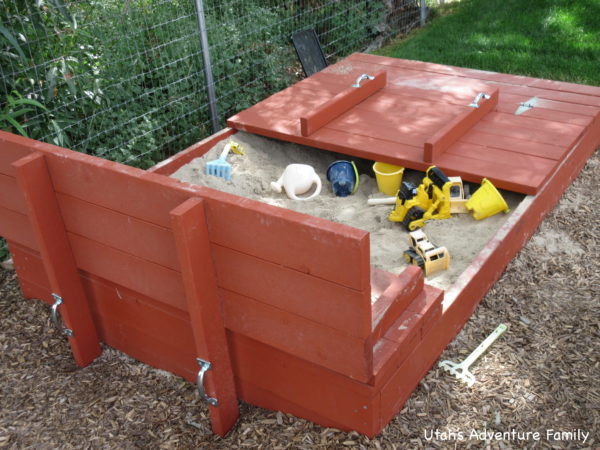
A tall wooden sandbox features a hinged lid that opens from the top. Toys are stored inside while part of the cover remains lifted.
The deeper walls help keep sand contained during play. The lid keeps everything covered and organized when closed.
23. Fold Out Bench Seat Sandbox

A sandbox includes two wooden panels that fold out into bench seating on opposite sides. The sand area sits in the center.
The design adds both seating and easy access. It keeps the structure neat while offering a place to sit.
Fabric Covered Sandbox Tent Design
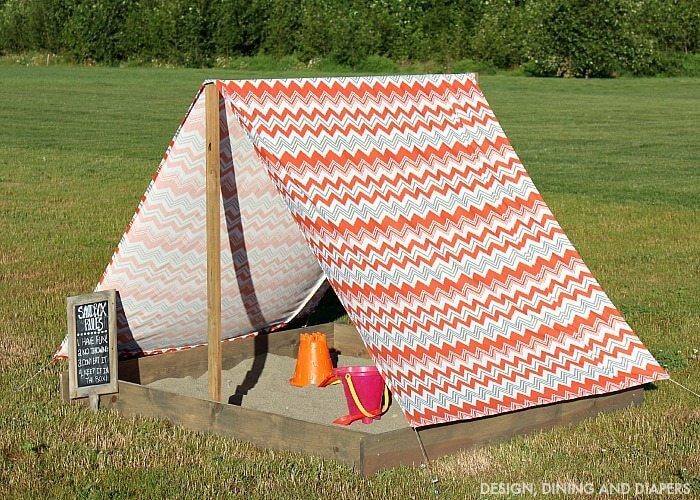
A sandbox is covered with patterned fabric stretched over a center frame. The open sides allow easy entry while keeping shade above.
The soft cover helps block direct sunlight. The setup feels light and flexible for outdoor use.
Corner Seat Wooden Sandbox Frame
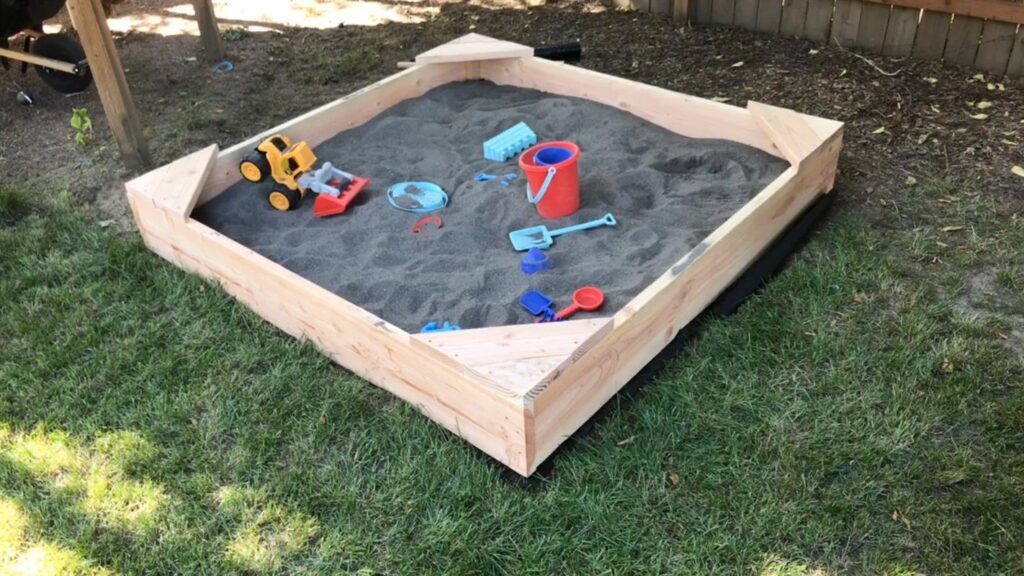
A square sandbox has angled wooden corners that act as small seats. Toys are placed across the sand inside.
The corner seating adds function without taking extra space. The frame keeps the structure clean and balanced.
Tent Style Sandbox With Fabric Shade
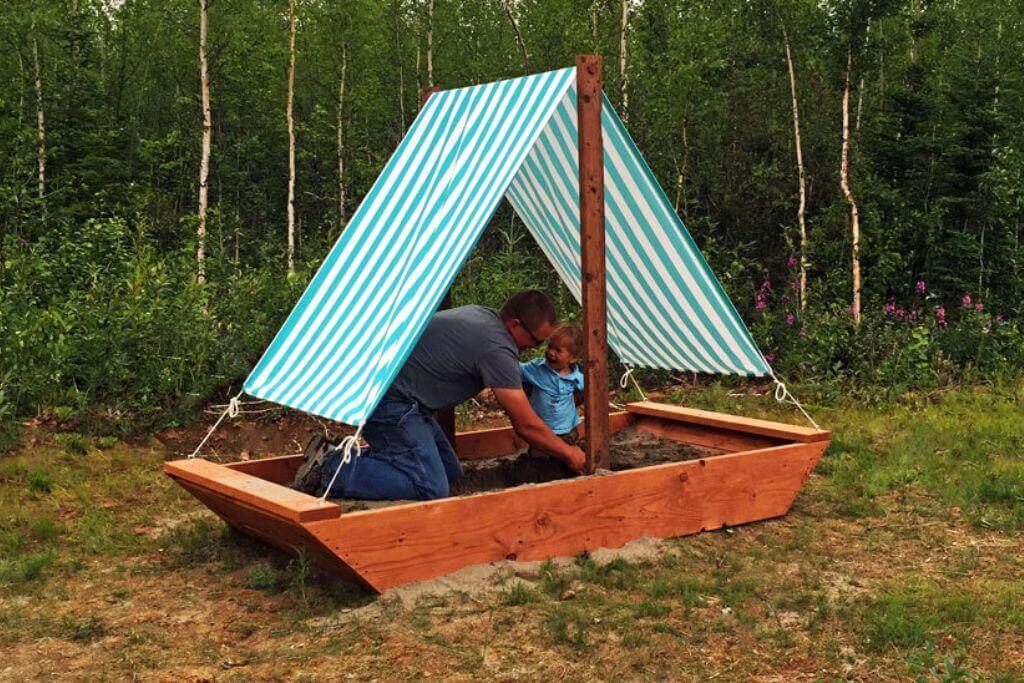
A wooden sandbox features a center pole with striped fabric stretched on both sides like a tent. A parent and child sit inside, playing together in the sand.
The fabric cover adds soft shade while keeping the setup open. The angled design also gives it a playful and unique look.
Sliding Lid Sandbox Cover
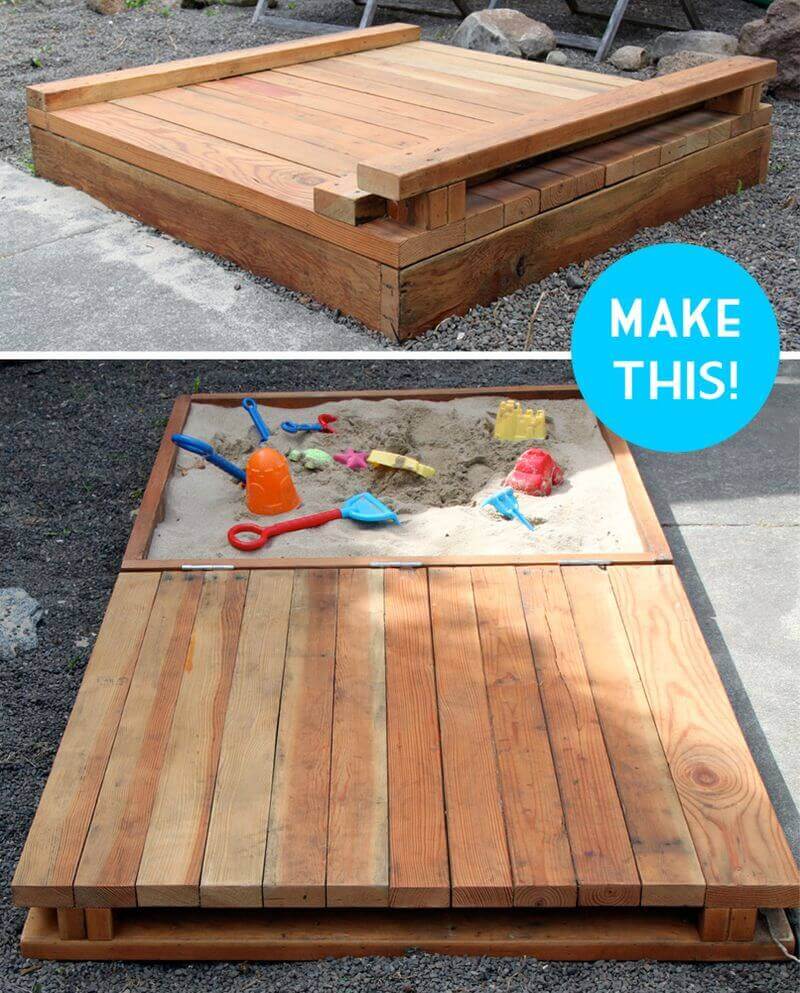
A wooden sandbox includes a sliding cover made from flat planks. One side opens to reveal sand and toys inside.
The cover helps keep the sand clean when not in use. It also adds a neat and compact appearance to the setup.
Folding Bench Sandbox With Lid
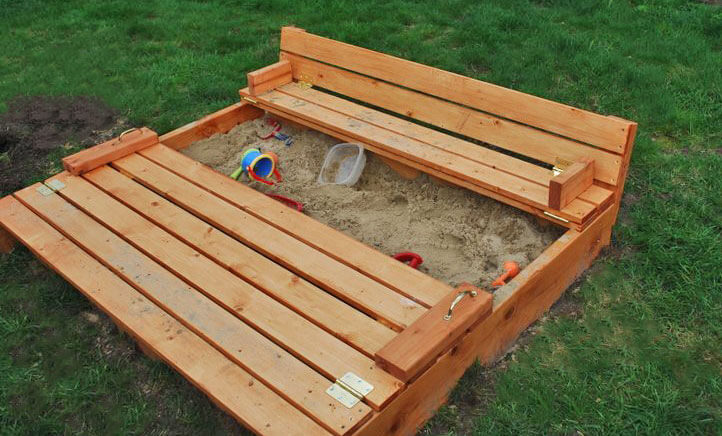
This sandbox has wooden panels that fold back into bench seating. The opened sections reveal the sand area inside.
The dual-function design saves space and adds comfort. It also keeps the sandbox covered when closed.
Hexagon Sandbox Under Tree
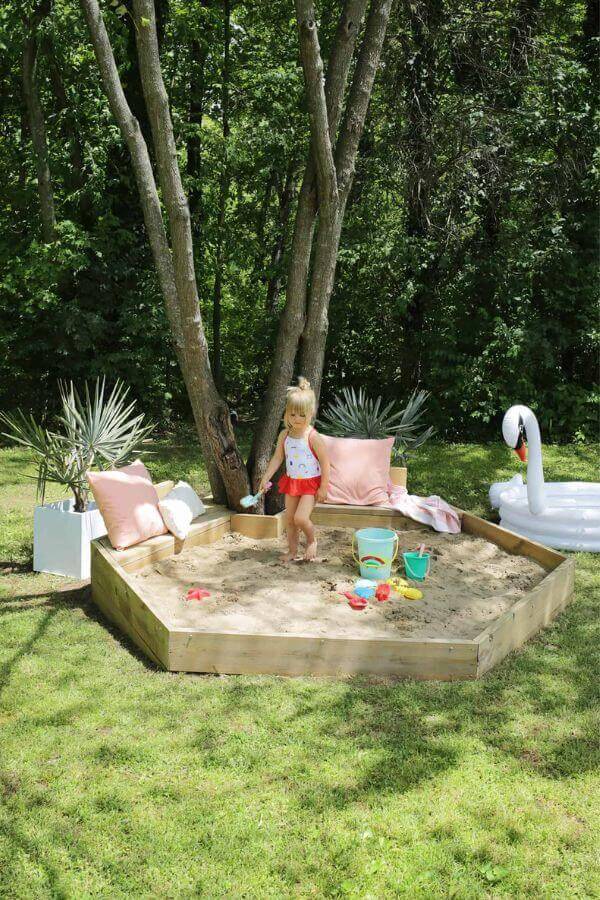
A six-sided sandbox sits under a tree with soft seating and decor around it. A child stands inside with toys scattered in the sand.
The shape adds visual interest while fitting naturally into the yard. The surrounding setup creates a cozy play area.
Compact Raised Sandbox Box
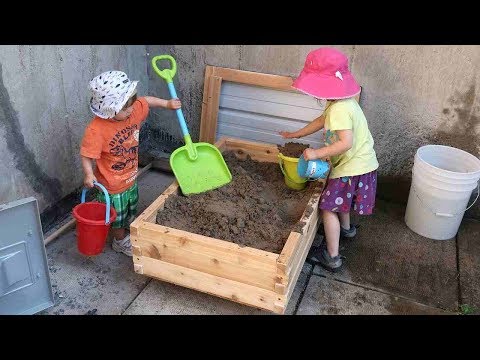
Two children play in a small raised wooden sandbox filled with sand. The box-style frame keeps everything contained.
Its higher edges help reduce sand spilling out. The size works well for tighter outdoor areas.
Framed Sandbox With Wide Edges
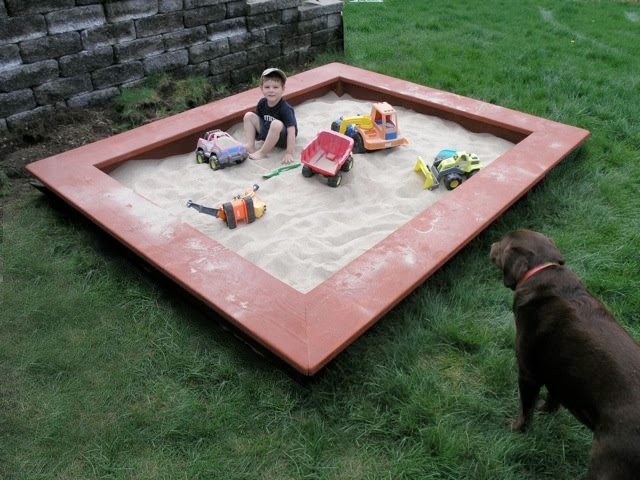
A square sandbox has thick painted edges that form a bold frame. A child sits inside with toy trucks while a dog stands nearby.
The wide border creates a clear boundary and adds durability. It also provides a place to sit during play.
Flat Cover Sandbox With Handles
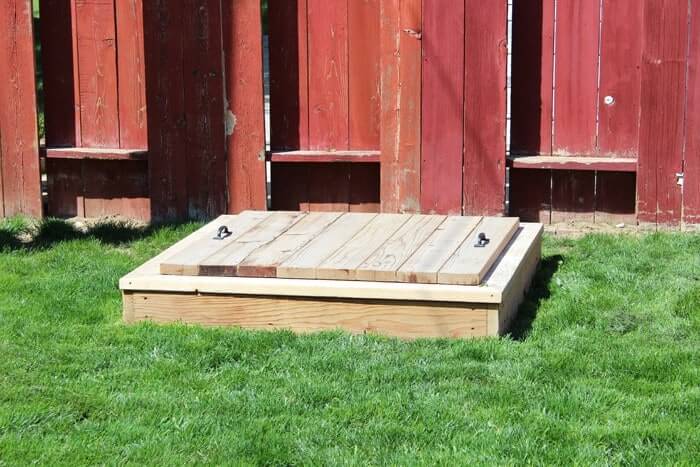
A low wooden sandbox is fully covered with a flat lid that includes metal handles. The structure sits neatly against a fence.
The lid keeps debris out and protects the sand. It also allows the sandbox to blend into the yard when closed.
Sandbox With Built-In Bench And Play Area
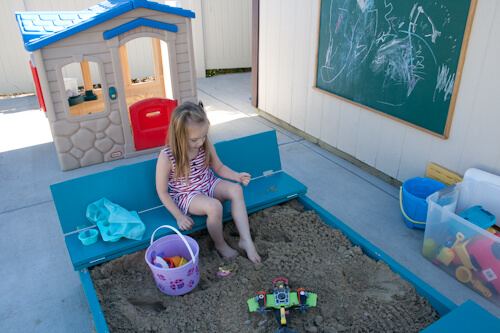
A child sits inside a sandbox that includes a small bench along one side. Nearby play items and a chalkboard add extra activity options.
The added seating makes the space more comfortable. The setup supports both sand play and other creative activities.
Creative Activities Kids Enjoy
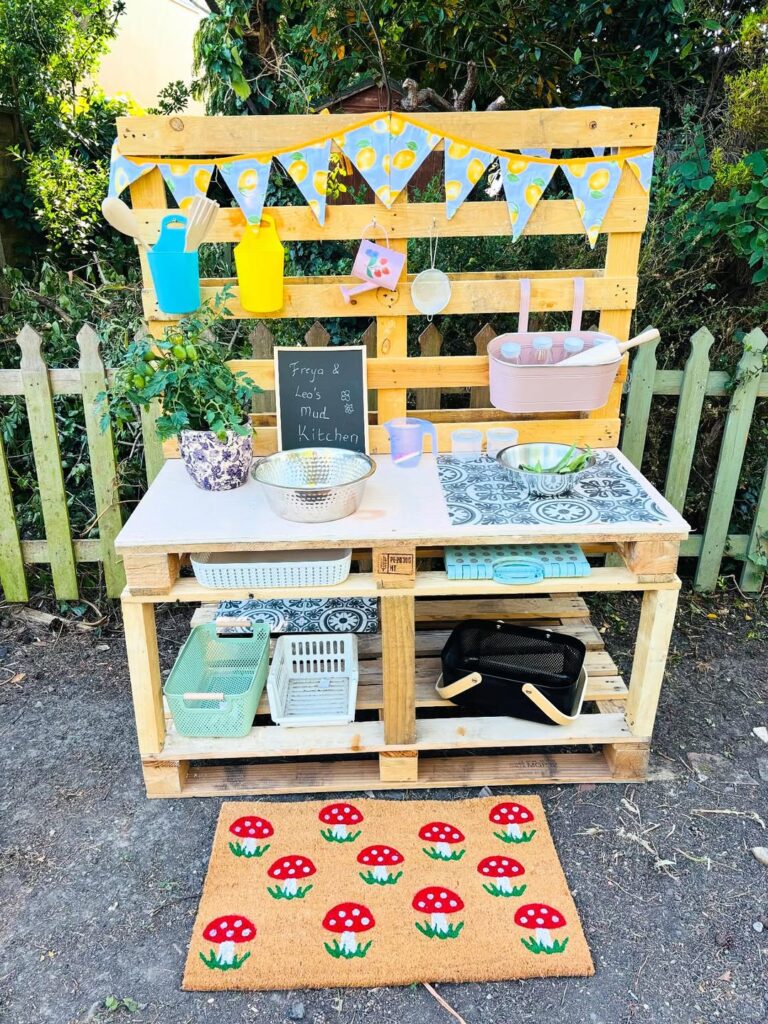
• Mud Kitchen Ideas For Kids
• Easy Science Experiments With Pantry Items
• Winter Crafts For Toddlers
Painted Sandbox With Umbrella Shade
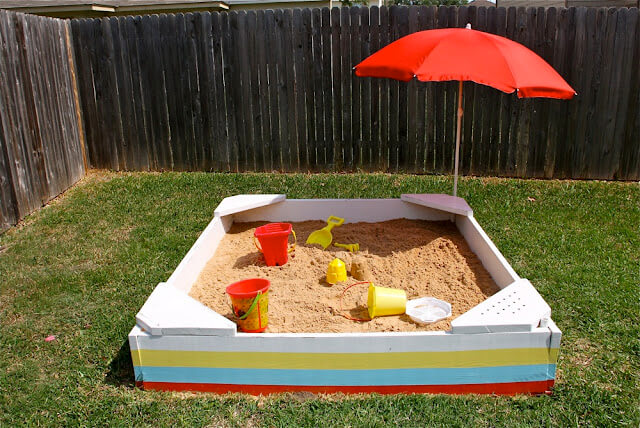
A square sandbox features soft-painted stripes along the sides and a red umbrella for shade. Toys are spread across the sand.
The bright colors give the sandbox a cheerful feel. The umbrella helps create a cooler play space.
Large Backyard Sandbox With Seating Edge
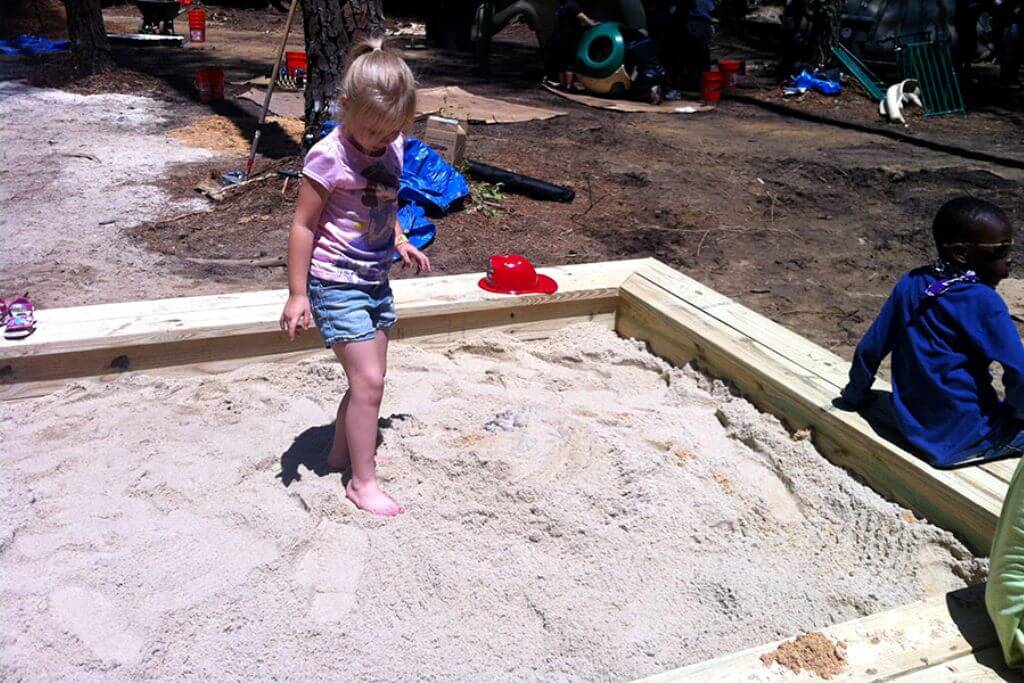
A wide sandbox holds a large amount of sand with kids playing inside. The thick wooden border acts as a sitting edge.
The size supports group play and movement. The sturdy frame keeps the structure stable over time.
Classic Wooden Sandbox With Corner Seats
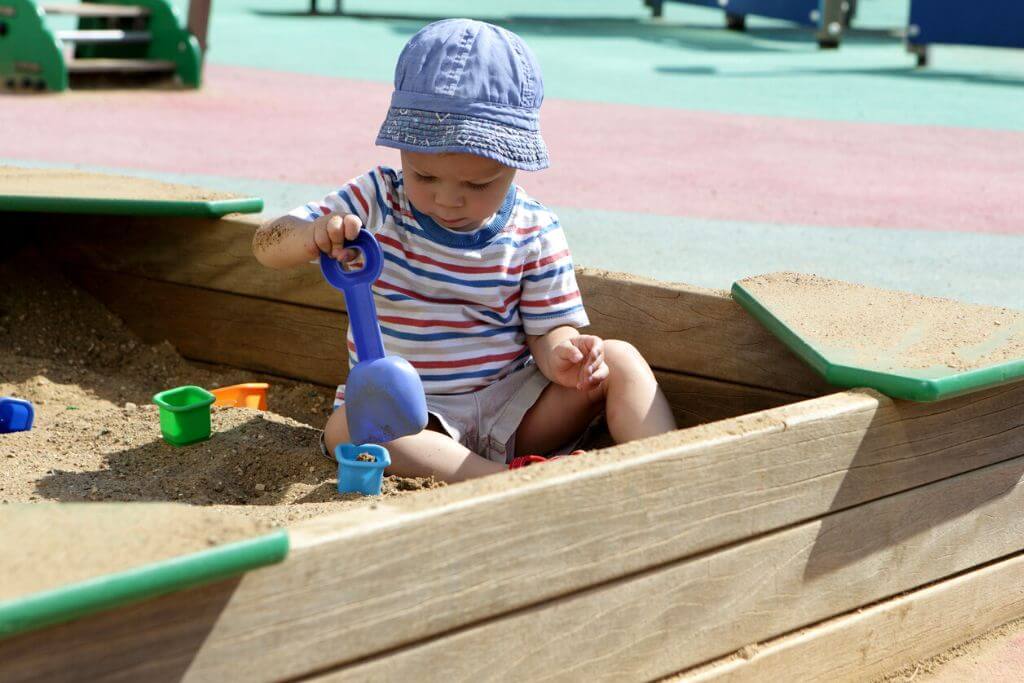
A small child sits inside a wooden sandbox, using a blue shovel and colorful buckets. The raised edges act as seating, making it easier for kids to stay comfortable while playing.
Natural wood gives the setup a simple and clean look. The open design keeps everything easy to access while still feeling contained and safe.
Built-In Bench Sandbox Design
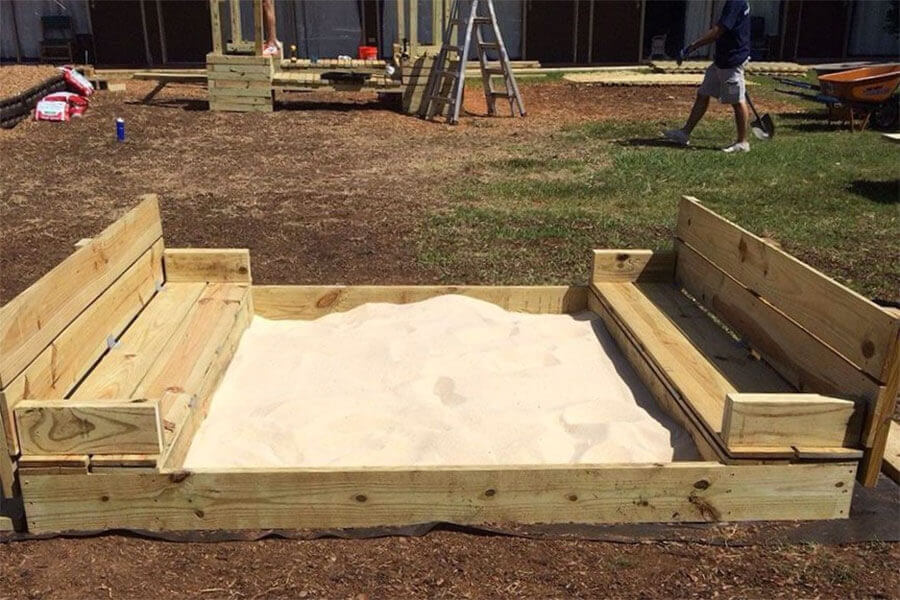
A rectangular sandbox features wide wooden benches on both sides. The structure looks sturdy, with clean cuts and a balanced layout.
Extra seating makes this design practical for multiple kids. It also gives parents a place to sit close during playtime.
Painted Sandbox With Shade Umbrella
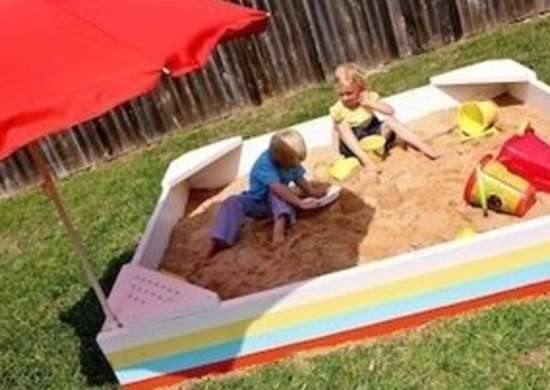
Two kids play inside a painted sandbox with soft color accents along the sides. A bright red umbrella provides shade over part of the area.
Colorful details make the space feel playful and inviting. The added shade helps keep the sand cooler during sunny days.
Simple Backyard Sandbox Frame
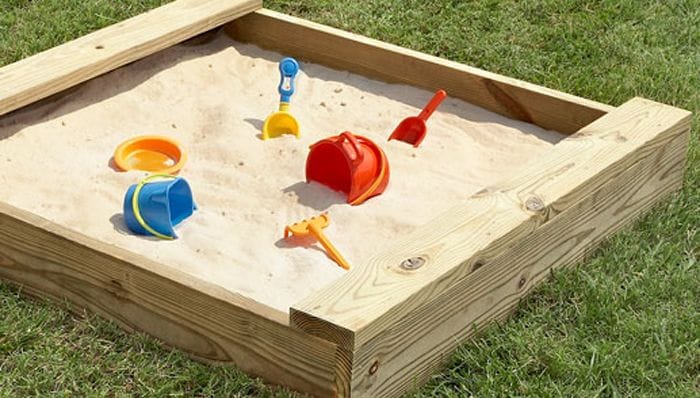
A basic wooden sandbox sits directly on the grass with toys scattered inside. The low frame keeps it easy for kids to step in and out.
This setup focuses on function with no extra features. It works well for quick builds and smaller outdoor spaces.
Covered Sandbox With Roof
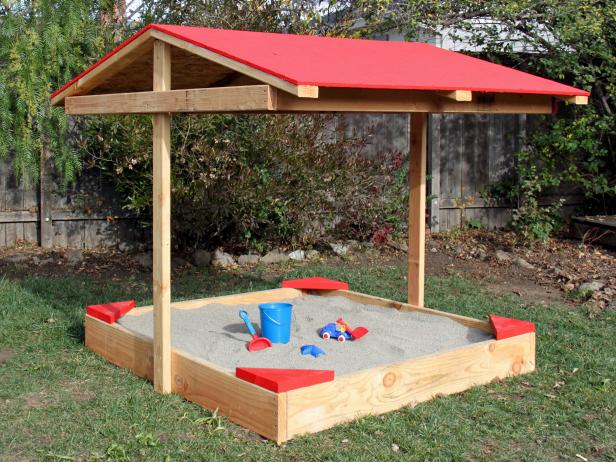
A wooden sandbox includes a small roof supported by posts on each corner. The top provides full coverage over the sand area.
Shade from the roof helps protect kids from direct sun. The structure also keeps the sand cleaner over time.
Log Style Wooden Sandbox
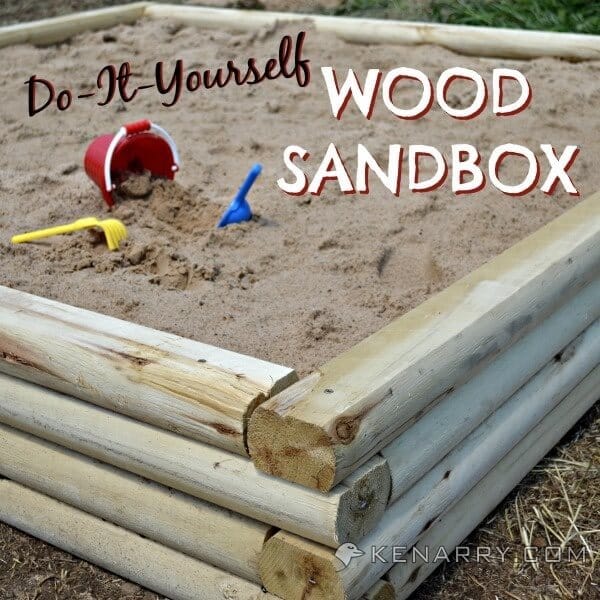
This sandbox uses rounded wooden logs stacked at the corners. The design feels more natural and slightly rustic.
Thicker edges make the structure look strong and long-lasting. The deeper frame allows for more sand inside.
Large Open Sandbox Play Area
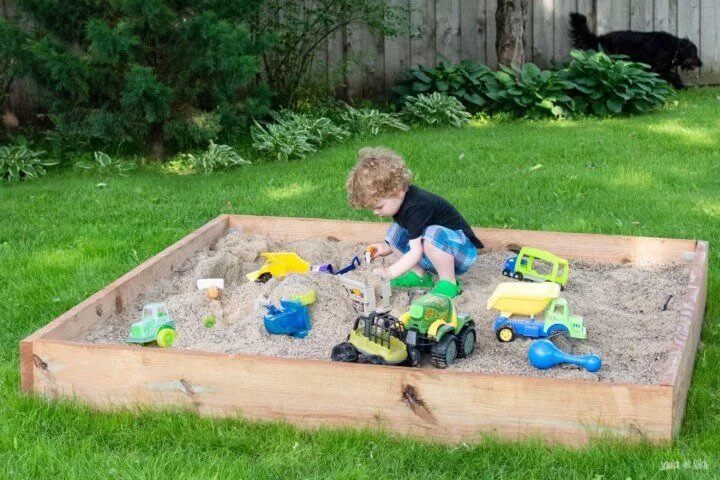
A child plays with toy trucks inside a wide sandbox placed in a grassy yard. The larger size gives plenty of room for movement.
More space allows multiple toys and activities at once. It supports longer play sessions without feeling crowded.
Compact Sandbox Corner Setup
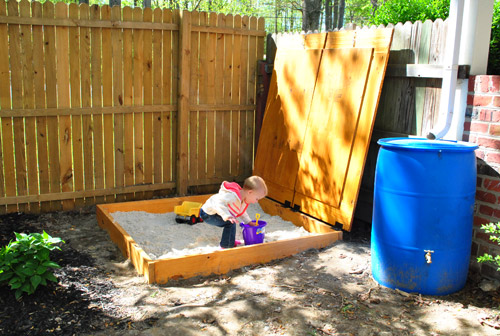
A small sandbox sits near a fence and an outdoor area with a barrel nearby. The setup uses a tight corner space efficiently.
This layout works well for limited yards. It keeps play contained while still offering enough room for fun.
Family Size Sandbox Build
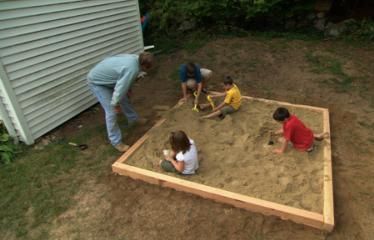
Several children and an adult gather around a large square sandbox. The size allows group play without overlap.
The wide frame makes it suitable for shared activities. It becomes a central play spot in the yard.
Bright Painted Sandbox Frame
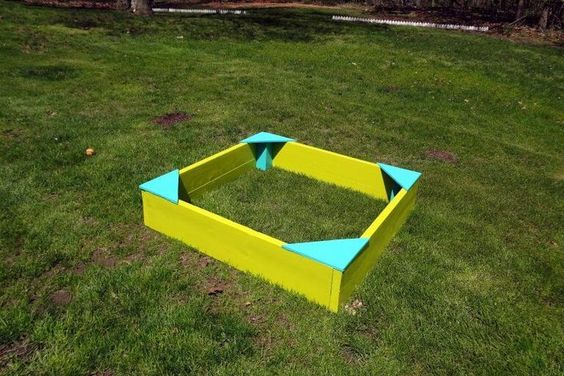
A sandbox with bold yellow sides and green corner accents stands out in the yard. The shape is neat and evenly built.
Bright colors add a fun visual touch to the outdoor space. The design keeps things simple while still feeling lively.
More Play Ideas Parents Love
• Toddler Playroom Ideas
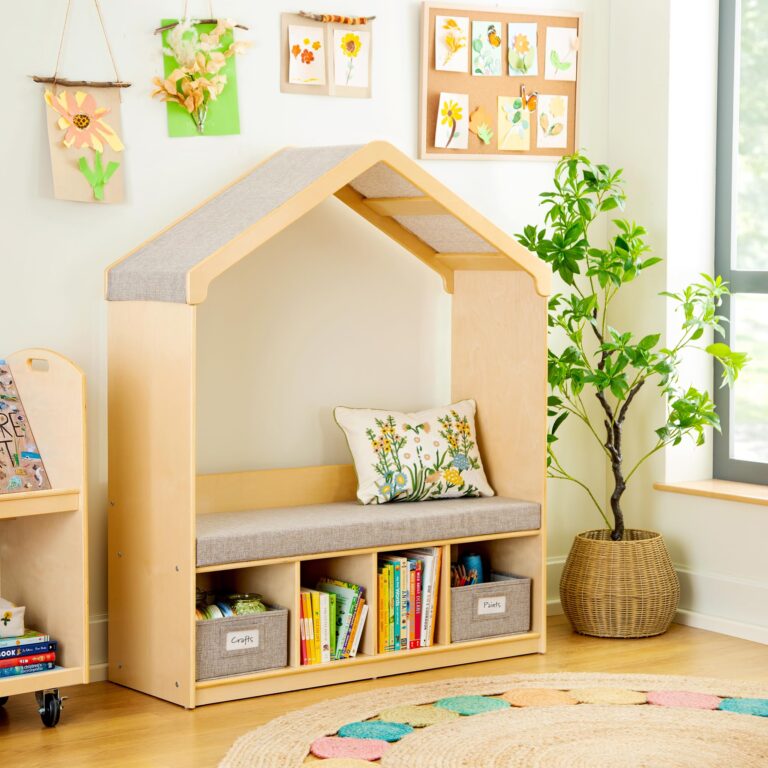
• Toddler Reading Nook
FAQ
How Do You Choose The Right Location For A Sandbox?
Pick a spot that is easy to see from inside your home so you can keep an eye on the kids while they play. A shaded area works best to keep the sand cool and comfortable. Make sure the ground is level and drains well so water does not collect. Avoid placing it too close to trees that drop leaves or debris into the sand.
What Type Of Sand Is Safe For Kids To Use?
Use play sand that is labeled safe for children. It is cleaned and processed to remove harmful materials. Avoid construction or river sand since it may contain dust or sharp particles. Always check the texture before use. Soft and fine sand works best for digging and building.
How Do You Keep A Sandbox Clean?
Cover the sandbox when it is not in use to keep out dirt, leaves, and animals. Remove toys and debris after playtime to keep the surface clean. Rake the sand occasionally to maintain an even layer. It also helps to replace the sand over time if it starts to look dirty or compacted.
Do You Need A Cover For A Sandbox?
A cover helps protect the sand from rain, insects, and unwanted mess. It keeps the area ready for play without extra cleaning. You can use a wooden lid, fabric cover, or a simple tarp. Keeping it covered also helps extend the life of the sand.
How Deep Should A Sandbox Be For Kids?
Most sandboxes work well with a depth of around 6 to 8 inches of sand. This gives enough space for digging and building without making it hard to maintain. A slightly deeper frame can help keep sand inside and reduce spills around the edges.
Conclusion
A sandbox brings simple outdoor play back into everyday life. It gives kids a space to explore, build, and stay active without needing complicated setups.
With the right design, it can fit into any yard and stay easy to manage over time. Small details like seating, covers, or shade can make a big difference in how often it gets used.
If these DIY sandbox ideas gave you inspiration, share this with your friends and family so they can create a fun play space too.